
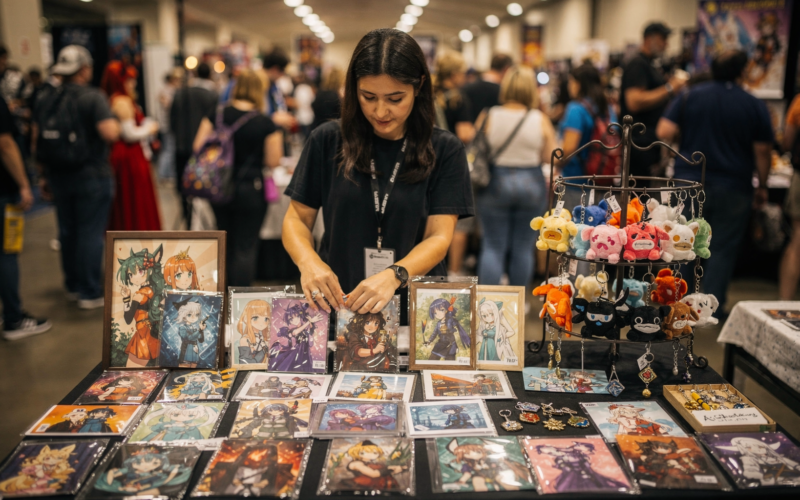
Behind the spectacle of any major fan convention sits a sprawling, mostly invisible economy. For every celebrity panel, there are hundreds of independent artists, makers, and creators quietly turning their passion into income. The business of fandom has grown into a genuine career path, and understanding how it works is useful far beyond the convention floor.
The Convention Economy Is Bigger Than It Looks
The headline names draw the crowds, but the economic engine is the artist alley and vendor floor. Thousands of small creators sell directly to an audience that arrives ready to spend. For many, a single big convention can represent a meaningful share of their annual income.
From Hobby to Side Hustle
Most fandom careers start small. An artist posts work online, builds a following, and tests the waters with a few products. The leap from hobby to side hustle happens when demand outgrows spare time, and the trick is scaling deliberately rather than all at once.
The Many Ways to Earn
Fandom income is rarely one stream. Successful creators typically mix original prints, commissions, digital products, memberships, and event sales. That diversity is not just extra revenue, it is insurance against any single channel drying up.
Building an Audience First
The hardest and most valuable work is audience building. Products only sell when people are already paying attention. Creators who invest in a genuine community before pushing hard to monetize tend to build something far more durable than those who lead with sales.
The Intellectual Property Tightrope
Fan work lives in a legal gray zone. Selling art based on characters you do not own carries real risk, and the rules vary widely. Savvy creators learn where the lines are, lean on original work to build a stable foundation, and treat fan pieces with caution.
Pricing Your Work Fairly
Underpricing is the most common mistake. New creators often set prices based on fear rather than value, leaving money on the table and burning out. Pricing that accounts for materials, time, and skill is not greedy, it is what makes the work sustainable.
Turning Events Into Repeat Business
A convention sale is only the beginning. The creators who thrive treat each event as a chance to capture an ongoing relationship, through mailing lists, social follows, and memberships. The goal is to convert a one-time buyer into a long-term supporter.
Is a Fandom Career Realistic?
For most people it starts as a side hustle and stays one, which is perfectly valid. A smaller number build it into a full living through years of consistent work. Either way, the skills transfer. For more on modern work, see our related coverage.
Frequently Asked Questions
Can you really make a living from fandom?
Some creators do, though for most it begins and remains a side hustle, which is still valuable.
What are the main income streams?
Prints, commissions, digital products, memberships, and event sales, usually combined rather than relied on singly.
What comes first, products or audience?
Audience. Products sell best when a genuine community is already paying attention.
Is selling fan art legal?
It sits in a legal gray zone with real risk, so many creators build a foundation of original work.
What is the biggest pricing mistake?
Underpricing. Prices should reflect materials, time, and skill to be sustainable.
How do creators turn events into lasting income?
By capturing ongoing relationships through mailing lists, social follows, and memberships.