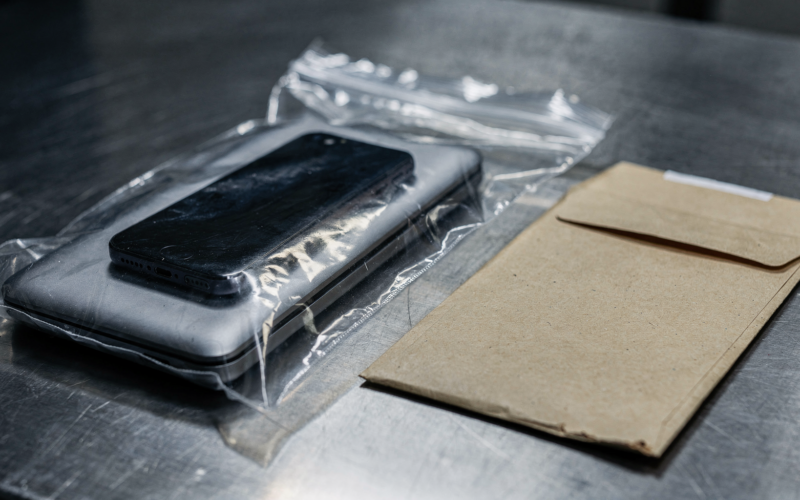
Federal agents seized Eric Swalwell’s electronic devices at San Francisco International Airport on Saturday and searched his Washington home the following day, escalating a sexual misconduct investigation that had already ended his congressional career and his run for governor of California.
No charges have been filed. Swalwell has not personally responded, and his legal team has not answered requests for comment on the searches. His attorney called the underlying allegations false and politically motivated when they first surfaced in April.
What Happened
The devices were taken at the airport on Saturday, August 15. The home search followed on Sunday, August 16. Neither became public until Thursday.
The FBI declined to comment on either action. Search warrants of this kind require a judge to find probable cause, which is a meaningful procedural bar and also not a determination that anyone committed a crime.
The Allegations
One woman alleges Swalwell raped her in 2018 at a Southern California hotel. A second alleges an assault in New York City in 2024 at a charity gala. Additional women say they received unsolicited explicit messages and nude photographs.
In total there is one public accuser and four others alleging various misconduct. Every one of these remains an allegation. None has been tested in court, and Swalwell has not been charged with anything.
Three Separate Offices Are Looking at This
The Manhattan District Attorney’s office confirmed it opened an investigation in April. A spokesperson encouraged survivors and anyone with knowledge of these allegations to contact its Special Victims Division.
The Los Angeles County Sheriff’s Department opened a separate inquiry through its Special Victims Bureau around the same time, covering the Southern California allegation. The FBI activity last weekend is federal and distinct from both. Three tracks running on overlapping facts in different jurisdictions is a sign this is being treated seriously by more than one office, and it also means the timelines will not move together.
He Already Left Congress Over This
Swalwell resigned in April after reporting from the San Francisco Chronicle and CNN. He also withdrew from the California governor’s race, where he had been considered a frontrunner.
That sequence matters for understanding where this sits. The political consequences arrived first and arrived fast. The legal process is running months behind them, which is the normal order of operations and often reads as strange to people watching in real time.
The Earlier Controversy Was Different
Swalwell was removed from the House Intelligence Committee in 2023 over his past association with Christine Fang, a woman US officials assessed to be a Chinese intelligence operative. He was never accused of wrongdoing in that matter and was not charged.
It is worth separating because the two things get merged constantly online. The Fang matter was a counterintelligence and judgment question. This is a criminal investigation into alleged sexual assault. They have nothing to do with each other.
What the Accusers’ Side Has Said
Attorney Arick Fudali, who represents accuser Lonna Drewes, said they are encouraged to learn about the escalation of the FBI’s investigation.
That is the only statement from the accuser side reported so far. There has been no public statement from the woman alleging the 2018 assault, and the other complainants have not been identified.
Why the Device Seizure Is the Significant Part
One detail in the warrant paperwork has drawn particular attention from legal observers. The federal warrant reportedly cites a statute covering deprivation of rights under color of law, a provision used to prosecute abuse of official power rather than a sex offense statute. Former prosecutors quoted in coverage have offered theories about what that could indicate, and none of those theories is confirmed. The honest reading is that the statute choice is unusual and its significance is not yet publicly established.
Several of the allegations involve unsolicited explicit messages and photographs, which is to say the alleged conduct lives on a phone.
Seizing devices at an airport rather than serving a subpoena suggests investigators wanted the hardware before anyone could act on it. That is a choice about preservation, and it is the kind of step that usually indicates an investigation has moved past the preliminary stage. For related coverage of a federal case that turned on what was and was not preserved, see our reporting on the David Morens guilty plea.
What Happens Next
Nothing on a public timeline. There is no charging deadline, no scheduled hearing and no indication of when either office will decide whether to proceed.
Federal investigations of this type routinely take a year or more between a search and any charging decision, and a substantial share end without charges. Anyone treating this week’s news as a verdict is getting ahead of a process that has barely started.
There is also the question of timing and how it will be read. Investigative steps of this kind are usually the product of months of work rather than days, but the public only sees the visible moments, and those moments arrive without the context that preceded them. That gap is where political interpretation rushes in from every direction, and it tends to outrun the actual record by a wide margin.
Legal analysts have made a related point about what device seizures signal procedurally. Obtaining authorization to take and search someone’s phones and laptops requires a showing to a judge, which means a court has already reviewed something before the devices change hands. That is a meaningful threshold, and it is also not a finding of wrongdoing, a charge, or anything close to a conclusion.
For readers trying to track this responsibly, the distinction worth holding onto is between investigative activity and legal outcome. Investigations produce charges sometimes and produce nothing other times, and the visible early steps look identical in both cases. Anyone claiming to know which of those two this will become is guessing.
The other thing to watch is whether any of the underlying material becomes public through court filings. Filings are where allegations get stated with specificity and where a defense response gets entered into the record, and until that happens the public account is assembled from reporting on unnamed sources rather than from documents anyone can read.
Frequently Asked Questions
What did the FBI do?
Agents seized Eric Swalwell’s electronic devices at San Francisco International Airport on August 15 and searched his Washington home on August 16.
What is he accused of?
One woman alleges a 2018 rape at a Southern California hotel, another alleges a 2024 assault in New York City, and additional women allege unsolicited explicit messages and photographs.
Has he been charged?
No. No charges have been filed and every claim remains an allegation.
Is he still in Congress?
No. He resigned in April 2026 and withdrew from the California governor’s race.
Who is investigating?
The FBI, and separately the Manhattan District Attorney’s office, which confirmed it opened an investigation in April.
Has Swalwell responded?
Not personally. His attorney declined to comment.