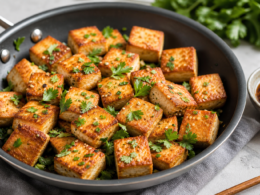
Ten years ago beef tallow was something your grandmother mentioned and nobody stocked. In 2026 it is a marketing asset. Whole Foods Market’s trends council named the tallow takeover one of its top predictions for the year, chains including Steak ‘n Shake have swapped their fryer oil and said so loudly, and diners have started choosing restaurants based on what is bubbling in the vat. It is a genuine shift in American cooking. It is also a case study in a trend outrunning its evidence.
How Fast This Actually Moved
The speed is the story. A March 2026 survey found that 52 percent of diners between 18 and 34 say knowing whether a restaurant uses tallow or seed oils affects where they choose to eat. That is a majority of a demographic making a restaurant decision based on a fat they could not have identified a few years ago. Whatever you think of the reasoning, that is real consumer behavior and the industry is responding to it accordingly.
Why It Left in the First Place
Tallow did not vanish by accident. Fast food fried in it for decades until a coordinated campaign in the late 1980s pushed chains toward vegetable oils on the grounds that saturated fat drove heart disease. The switch was a public health victory at the time and it was based on the best evidence available. The irony is that the replacement oils were often partially hydrogenated, which introduced trans fats, which turned out to be considerably worse than what they replaced.
The Flavor Argument Is the Strong One
Set the nutrition aside and the cooks have a point. Tallow has a high smoke point, holds up to repeated frying cycles, and produces a specific savory quality in a fry that vegetable oil does not replicate. Anyone who ate fast food fries before 1990 and after can tell you something changed. This part of the case is not contested by anybody, and it is probably the honest reason most chefs made the switch.
Where the Health Claims Get Shaky
The nutritional argument is considerably weaker than the internet suggests. Tallow is roughly half saturated fat, and major cardiology and nutrition bodies continue to recommend replacing saturated fat with unsaturated fat for cardiovascular risk. The claim that seed oils are uniquely inflammatory or toxic is not supported by the weight of current evidence, and several of the widely shared talking points rest on mechanistic reasoning rather than outcomes in people. Refined seed oils also have high smoke points, so that particular argument does not do the work it is asked to do.
The Steelman for the Skeptics
There is a defensible version of the seed oil concern and it deserves an airing. Industrial oils are heavily present in ultraprocessed food, and diets high in ultraprocessed food are reliably associated with poor outcomes. It is genuinely hard to separate the oil from the food it arrives in. Someone who cuts seed oils typically also cuts out most packaged snacks and fast food, and then attributes the improvement to the oil. The change is real. The causal story may be pointed at the wrong culprit.
What Ancestral Actually Means Here
Whole Foods framed the trend around shoppers craving ancestral ingredients, which is an honest description of the appetite driving this. People want food with a shorter story. Tallow has one, and rendering it at home from suet is straightforward and cheap. That impulse is not irrational, even when the specific health claims attached to it are shaky. Wanting to know what is in your food is a reasonable thing to want.
How to Cook With It Without Overthinking
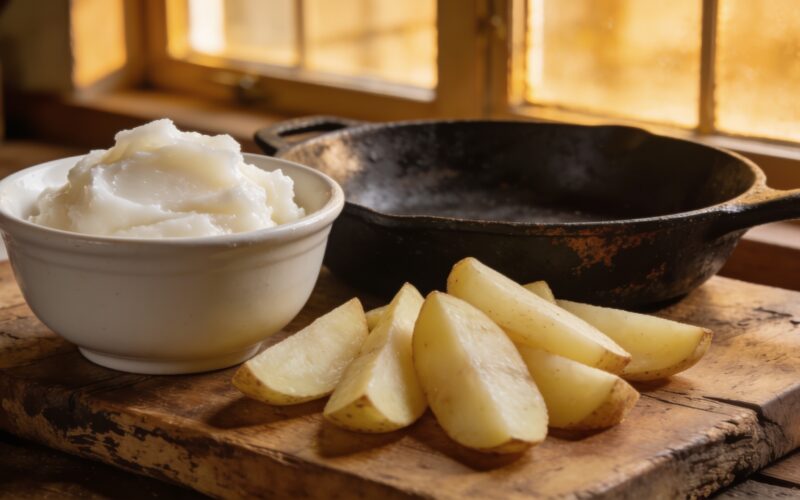
Tallow is excellent for roasting potatoes, searing, and anything you want crisp at high heat. It solidifies at room temperature, keeps for months refrigerated, and can be reused a few times if you strain it. Treat it as one fat among several rather than a replacement for all of them. Olive oil for finishing and lower heat, butter where butter belongs, tallow when you want the crust. That is a kitchen answer rather than an ideological one.
The Sensible Position
Enjoy tallow because it makes better fries, not because a video told you seed oils are poisoning you. The total amount of fried food in your diet almost certainly matters more than which fat did the frying, and that is the boring conclusion that nobody builds a brand around. It sits alongside a lot of nutrition advice that is unglamorous and well supported, in the same category as the finding that losing ninety minutes of sleep a night quietly adds weight. The unexciting variables usually carry more weight than the contested ones.
Frequently Asked Questions
Is beef tallow healthier than seed oils?
The evidence does not support that as a general claim. Tallow is about half saturated fat, and mainstream guidance still favors unsaturated fats for heart health. It is a flavor and performance choice more than a health upgrade.
Why are restaurants switching to tallow?
Flavor, frying performance, and customer demand. A majority of younger diners now say the cooking fat influences where they eat, which makes the switch a marketing decision as much as a culinary one.
Are seed oils actually inflammatory?
The strong version of that claim is not well supported by human outcome data. Much of the concern comes from laboratory mechanisms and from the fact that these oils are common in ultraprocessed foods.
What is tallow good for at home?
High heat work. Roasting potatoes, searing meat, and frying where you want a crisp exterior. It is less suited to dressings or anything you want to taste clean and light.
Can I make tallow myself?
Yes. Rendering beef suet slowly over low heat and straining it produces tallow cheaply. Stored in the refrigerator in a sealed jar it keeps for months.
Should I throw out my vegetable oil?
There is no evidence based reason to. Using different fats for different jobs is the practical approach, and total diet quality matters far more than which bottle you reach for.