The 2026 World Cup is in the books, and now that the confetti has been swept up it is the perfect moment to look at the tournament through the one lens that never lies: the numbers. Records fell, a couple of firsts happened that had never occurred in nearly a century of the competition, and the off pitch spectacle drew an audience that dwarfed almost anything else on the planet. Here is the tournament told through its most telling statistics, with the sources for each figure so you can trust what you are reading.
The final: a title defense denied
Spain beat Argentina in the final, winning it in extra time to lift the trophy and deny Argentina back to back titles, per match reporting from The Athletic and The New York Times. The winning goal came from Ferran Torres late in the additional period. It was the kind of tight, grinding final that rewards the numbers nerds, because the scoreline barely hints at how lopsided the underlying play actually was.
The most dominant final performance in memory
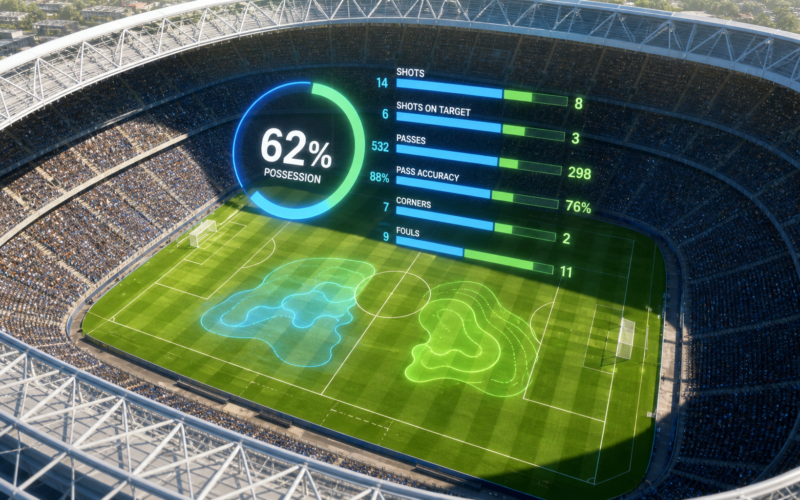
The possession and shot data tell the real story. According to DAZN, Spain controlled roughly 65 percent of possession and put twelve shots on target across the match. Argentina, remarkably, managed zero shots on target and did not register a single attempt on goal until the 117th minute. For a World Cup final, that level of one sided territorial and chance dominance is almost unheard of, and it reframes a 1 to 0 result as far more commanding than the margin suggests.
The score that had never happened before
The tournament also produced a genuine statistical first in the third place match, where France beat England in a wild game that finished 6 to 4. According to the account tracking World Cup “Scorigami,” that exact scoreline had never occurred in the entire history of the competition, spanning 96 years and more than a thousand matches. It became one of the tournament’s defining moments precisely because it was, by the numbers, unique.
Goals, chaos, and the third place spectacle
That France versus England result deserves a second look on its own terms. Ten combined goals in a third place playoff is a firehose of scoring in a fixture often criticized as a meaningless consolation. Instead it delivered one of the most entertaining matches of the entire event, proving that the numbers can occasionally turn a supposedly low stakes game into the one everybody remembers. We covered the drama of the knockout rounds in more detail in our France versus England recap.
The halftime show reached a global audience
The tournament’s off pitch numbers were staggering too. The final’s halftime show, staged during the day to match the daytime kickoff, brought together a lineup of global music stars and drove enormous social conversation. Around the event, one performer’s fanbase helped push them to the top of the most talked about figures online, generating millions of mentions and briefly outpacing some of the biggest names in sports and public life. The reach underscored how the World Cup has become as much a cultural broadcast as a sporting one.
What the data says about the tournament’s shape
Zoom out and a pattern emerges. A champion that won through control rather than chaos, a third place game that broke the scoring charts, and an off field audience measured in the hundreds of millions. The 2026 edition rewarded organized, possession heavy football at the very top while still producing the kind of unpredictable, high scoring madness in the margins that keeps casual fans hooked. It was, statistically, a tournament of extremes.
The records worth remembering
If you take three figures away from this tournament, make them these: Argentina’s zero shots on target in a World Cup final, the never before seen 6 to 4 scoreline in the third place match, and Spain’s roughly 65 percent possession in the decisive game. Each one, on its own, would be a notable footnote. Together, they make the 2026 World Cup one of the more statistically distinctive editions in the event’s long history.
Frequently Asked Questions
Who won the 2026 World Cup? Spain won, beating Argentina in extra time to deny Argentina back to back titles, per The Athletic and The New York Times.
How dominant was the final? Per DAZN, Spain had around 65 percent possession and twelve shots on target while Argentina had zero shots on target and no attempt until the 117th minute.
What was the “Scorigami” score? France beat England 6 to 4 in the third place match, a scoreline that had never happened in the competition’s roughly 96 year history, per the World Cup Scorigami account.
Who scored the winning goal in the final? Ferran Torres scored the decisive goal for Spain late in extra time.
Was the halftime show during the day? Yes. Because the final kicked off during the day, the halftime show was staged in daylight and featured a lineup of major global music artists.
Why is this World Cup considered statistically unusual? It combined an extremely one sided final, a record breaking high scoring third place match, and a massive global off pitch audience.