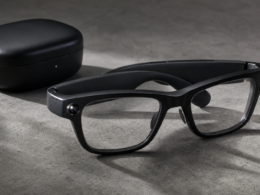
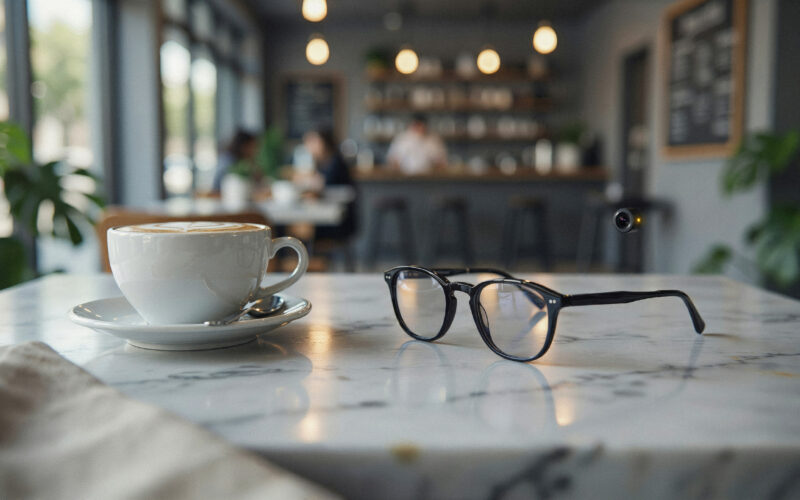
Somewhere in the last two years the argument about smart glasses stopped being about whether anyone would buy them. Meta is now selling millions of its EssilorLuxottica AI glasses with cameras and microphones built into the frames, Samsung has said it will launch its own pair later this year, and Apple is reportedly working on a privacy-focused version for next year. That is not a niche gadget anymore. That is a category. And the part nobody solved is the part that matters most, which is what happens to everyone else standing nearby.
The hardware quietly won the argument
Google Glass failed in 2013 and the lesson everyone took away was that people hate being recorded by a face computer. The actual lesson was narrower. People hated the specific, obvious, socially illegible version of it. Put the same sensors inside a pair of frames that look exactly like the sunglasses in the airport kiosk, attach a real brand, price them like sunglasses instead of like a prototype, and resistance collapses. The technology did not become more acceptable. It became less visible.
The tell is that there is no tell
Every current design includes some kind of indicator light, and every current design has the same flaw: you have to be looking for it, in decent lighting, from a reasonable distance, while already suspecting something. In a bar, on a train, at a kid’s swim meet, that is functionally no indicator at all. Compare that to a phone. When someone raises a phone, the entire posture of their body announces the act. That gesture was doing enormous social work and we are about to find out how much.
Consent used to be a physical gesture
This is the shift people keep missing. Recording consent in public has never really been legal consent, it has been a negotiation conducted through body language. You see the phone come up, you step out of frame, or you make a face, or you say something. The whole system depended on the recording device being conspicuous. Glasses remove the gesture without replacing it with anything, and there is no protocol yet for the version where the camera is always at eye level and always aimed at whoever you are talking to.
Recording is the least interesting part
The genuinely new thing is not capture, it is continuous interpretation. A phone video sits in a camera roll doing nothing. Glasses paired with an assistant are processing a live feed, identifying objects, reading text, answering questions about what is in front of the wearer. That is the actual feature people are buying. It also means the interesting question is not whether a clip gets posted, it is what gets inferred, where the inference happens, and how much of the surrounding scene has to leave the device for the useful part to work.
What actually changes inside a room
Expect the friction to show up in small places first. Gyms and locker rooms will post signs. Doctors’ offices and courthouses will ban them outright, the same way they banned phones and then gave up on phones. Some restaurants will ask you to take them off, mostly because one staff member had a bad experience. Schools will be a mess, because a teenager in prescription AI frames is not going to hand them over. None of this will be decided by a policy debate. It will be decided by whoever complains the loudest in the first six months.
The useful cases are real, which is the hard part
It would be easier if the whole category were frivolous. It is not. Hands-free navigation while carrying groceries is genuinely better than a phone. Live translation is genuinely better than a phone. For people with low vision, a device that reads a menu aloud without requiring you to hold something steady is not a novelty, it is access. Any honest version of this conversation has to sit with the fact that the same always-on sensor stack that makes strangers uncomfortable is what makes the accessibility use case work.
The industry is also fighting itself
Worth noticing that the same week the glasses conversation flared up, Nvidia, Microsoft and more than thirty other companies launched an open alliance for AI security tooling, and Microsoft shipped its first dedicated AI security model. Read that as an admission. The people building always-on AI hardware understand that the attack surface is enormous and that nobody trusts them to secure it alone. A pair of glasses is a networked microphone on a stranger’s face. That is a security story as much as a privacy story.
How to not be the problem
If you buy a pair, the whole etiquette is one sentence: announce them before anyone has to ask. Say it once when you walk in, push them up on your head during anything private, and take them off entirely for conversations that are actually about something. If you are on the other side of the lens, you are allowed to ask, and asking is not rude. The version of this that goes badly is the one where everyone silently assumes everyone else already agreed. Worth noting that the strongest counter-trend right now is deliberate disconnection, which is why screen-free outdoor time keeps growing even as the hardware gets more ambient.
Frequently Asked Questions
Can I tell if someone’s glasses are recording me?
Usually only if you are close, the light is good, and you already know to look for the indicator light. In practice, in most real settings, no.
Is it legal to record people in public with glasses?
In most of the United States, recording video in public spaces is broadly legal, but audio recording rules vary by state and some require all parties to consent. Private property owners can also set their own rules.
Which companies are actually selling these?
Meta is the volume leader through its partnership with EssilorLuxottica. Samsung has said its own smart glasses arrive later this year, and Apple is reported to be preparing a privacy-focused pair.
Do they upload everything to the cloud?
It depends on the feature. Simple capture stays local until you share it. Assistant features that answer questions about what you are looking at generally require sending data off the device.
Can I ask someone to take them off?
Yes, and you should if it matters to you. Framing it as a request rather than an accusation tends to work better.
Are they worth buying?
If you want hands-free navigation, translation, or accessibility support, they are genuinely useful. If you mostly want a camera, your phone is better and far less socially expensive.