Sneaker people have a phrase for this summer that keeps showing up in trade coverage: the life cycle of a sneaker feels shorter than it has ever felt. A silhouette arrives, saturates every feed, hits the discount rack and gets declared over, sometimes inside a single season. The shoe did not change. The clock did.
That compression is starting to show up everywhere, in what resells, in what retailers dare to stock, and in the strange feeling that you missed a trend you never actually heard about. It is worth asking who benefits from a calendar moving this fast, because it is not the person buying the shoes.
Insiders Are Finally Saying the Quiet Part
Retail and resale specialists talking to trade press this summer described the same pattern from different sides of the counter. Styles that once had a two or three year arc now peak and fade within months. Buyers are placing smaller orders across more silhouettes because nobody wants to be holding four hundred pairs of last quarter. When the people whose job is predicting demand admit they cannot predict it, that is not consumer fickleness. That is a supply chain running faster than taste can form.
What a Shorter Cycle Actually Looks Like
In practice it means the gap between a shoe being desirable and a shoe being marked down has collapsed. A model launches, gets seeded to the right feeds, sells through in a fortnight, then gets restocked in a dozen colorways until the shape itself feels tired. The final colorway of any hyped silhouette is usually the tell. Once a brand is releasing a version in pastel gingham, the story is over and everybody knows it, including the brand.
Resale Feels It First and Hardest
The secondary market is the fastest instrument on the dashboard. Pairs that would once have held value for a year now peak within weeks of release and settle below retail by autumn. That changes behavior in both directions. Flippers move faster and take smaller margins, and ordinary buyers who used to treat a purchase as semi liquid have started treating it as what it always was, which is a shoe. Honestly, that is healthier, even if it is less fun.
Why Brands Keep Pressing the Accelerator
Nobody sat down and decided to exhaust their own customers. The incentives just point that way. More drops mean more launch moments, more content, more chances to catch an algorithm. Newness is the cheapest marketing available, and a fresh colorway costs a fraction of developing a fresh idea. The problem is that novelty is a drug with a tolerance curve. Each release buys a smaller reaction than the last one, so the answer becomes another release.
What Is Actually Moving Right Now
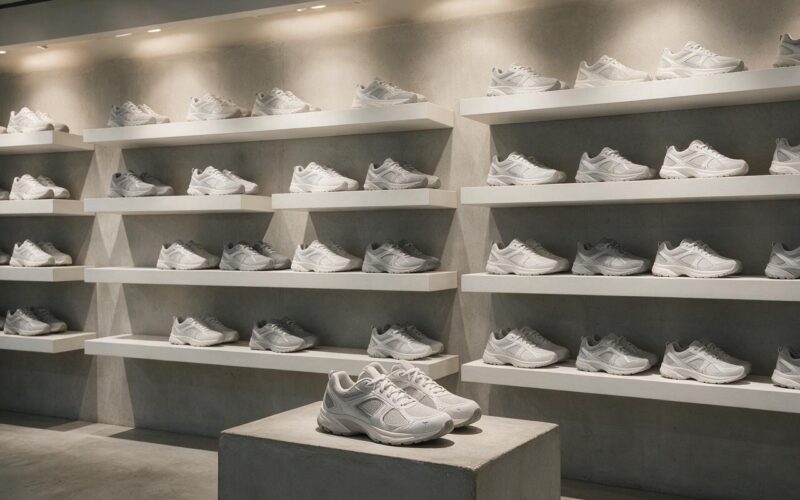
The shapes with momentum this season are not the loud ones. Metallic finishes and Mary Jane style straps have been quietly outrunning open toe options in late summer styling, which is a polite way of saying people picked sneakers over sandals in a heat wave. Low profile runners continue to absorb the ground that chunky trainers gave up. And the resurgence of genuinely plain leather models suggests a slice of the market is voting for shoes that will not be identifiable to the season in eighteen months.
The Grail Is Becoming Endangered
A grail requires scarcity plus time. Scarcity still exists, engineered carefully. Time does not. When a silhouette lives and dies inside a year, nothing accumulates the mythology that used to make a pair feel important. Ask anyone who collected in the early 2010s what a three year wait did to desire. Instant availability of everything, forever, in eleven colorways, is a strange kind of poverty. Brands are spending the cultural equity of their own archives at a rate they cannot replace.
The Case for Buying Slower
If the cycle is going to sprint, the only rational counter move is to walk. Buy the shape you have wanted for two years rather than the shape you learned about on Tuesday. Wait six weeks after any hyped release, because the price and your enthusiasm will both be more honest by then. Treat resale as a place to buy rather than a place to invest. None of this is discipline for its own sake. It just puts your calendar back under your control instead of a marketing team.
Where This Probably Lands by Spring
Expect fewer silhouettes and deeper runs from the biggest brands, because the cost of guessing wrong has become brutal. Expect smaller labels to keep winning attention precisely by releasing less. And expect the preloved and refurbished side of the business to keep expanding, since a shorter cycle produces enormous volumes of barely worn shoes that still have years in them. The correction will not be announced. It will just show up as a quieter release calendar.
The wider mood in this season’s fall trends points the same direction, toward clothes that are meant to be kept rather than cycled.
Frequently Asked Questions
Why do sneaker trends move so quickly now?
Brands release more models and more colorways to create constant launch moments, and social platforms saturate awareness within days rather than months.
Does that mean sneakers are a bad purchase?
No, it means they are a purchase rather than an asset. Buy shoes you want to wear rather than shoes you expect to appreciate.
What sneaker styles are trending late in summer 2026?
Metallic finishes and Mary Jane style straps are performing strongly, along with low profile runners and plain leather models with less obvious seasonal branding.
Is resale still worth it?
As a buying channel, yes, and increasingly so. As a way to make money, margins have compressed as pairs peak faster and fall below retail sooner.
How long should you wait before buying a hyped release?
A few weeks is usually enough for both the resale premium and the initial excitement to settle into something more accurate.
Are brands going to slow down?
Some already are. Smaller labels are using restraint as a differentiator, and larger brands face real inventory risk from guessing wrong across too many silhouettes.