There is a version of the American car market where sales look fine. Volumes are holding, dealer lots are moving, and the earnings calls sound calm. Then you ask who is actually signing the paperwork, and the picture changes completely.
MarketWatch reported this week that the wealthiest twenty percent of households have accounted for most new vehicle purchases in recent months, and that automakers are leaning harder on that group than they ever have. That is not a sales story. That is a structural one.
Two Markets Wearing One Set Of Numbers
When a top income bracket carries the volume, the aggregate figures stop describing the average buyer. A market can post respectable totals while the middle of it quietly stops participating. The people still buying are less sensitive to rates, more likely to be sitting on appreciated assets, and largely unbothered by another two thousand dollars on a sticker.
Everyone else is doing something different. They are keeping the car longer, buying used, or waiting for a payment that never gets smaller. None of that shows up as a headline decline until it has been happening for a while.
The Stock Market Is Now A Car Sales Input
The uncomfortable part of that reporting is the driver behind it. A long run in equities has fattened the balance sheets of exactly the households that buy new vehicles outright or with short loans. Their purchasing power is tied less to wages than to portfolio values.
That makes new car demand more correlated with market sentiment than it used to be, which is a strange place for an industry that spent a century selling to paychecks. It works beautifully until the thing propping it up stops going up.
Shopping Has Turned Into A Research Project
Separate industry research from CBT News found that the purchase journey now commonly stretches across one to three months, with buyers cross shopping brands, dealers and marketplaces before committing. Roughly a third now rank price above brand loyalty outright.
That is what a squeezed buyer looks like. Nobody spends ninety days comparing trims because they are having fun. They do it because the number at the bottom of the page has stopped feeling survivable, and loyalty is the first thing they are willing to trade away.
Affordability Is Reshaping Feature Priorities
Automotive News reported that new car buyers are now favoring basic driver assistance and safety systems over the expensive semi autonomous packages the industry has been marketing for a decade. Blind spot monitoring and automatic braking win. The hands free highway suite does not.
That is a rational reordering. When money is tight, people pay for the feature that prevents a collision and skip the one that impresses a passenger. It also puts automakers in an awkward spot, because the profitable options are the ones losing.
Loan Terms Are Doing The Hiding
The other reason volumes look steadier than the underlying demand is that loans keep stretching. Longer terms, larger amounts rolled forward from a previous vehicle, and a monthly payment engineered to fit rather than a price negotiated down.
A stretched term does not make a car cheaper. It moves the cost into years three through seven and quietly guarantees that the next trade in starts underwater. That is a bill the industry is writing to itself.
Used Vehicles Are Absorbing The Overflow
Every buyer who steps back from new does not leave the market. They land in used, which tightens supply and firms up prices on exactly the vehicles that budget buyers depend on. We have written before about how used electric vehicle prices stopped falling, and that same pressure is showing up across mainstream used inventory.
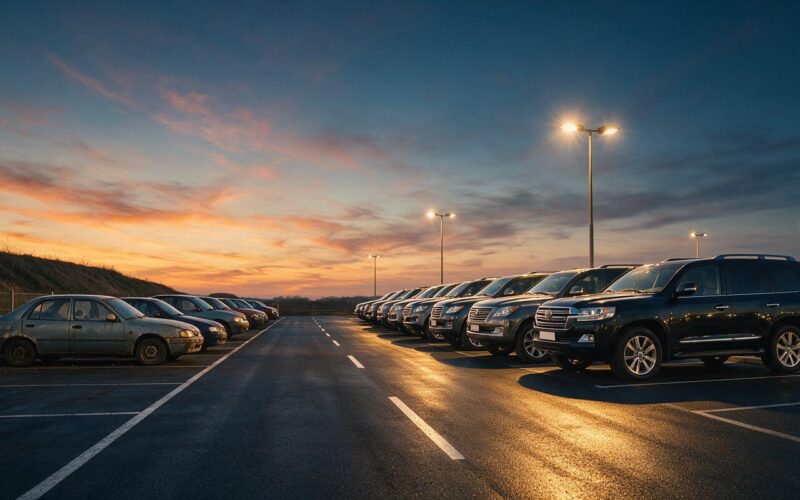
The result is a market with no cheap door. New is priced for the top quintile, and used is being bid up by everyone who got pushed out of new.
What Automakers Should Be Worried About
Depending on affluent buyers is a fine quarter and a bad decade. Brand habits form at the entry level, and a generation that never buys a new vehicle from you does not become a loyal customer later. The companies that shrink out of the affordable end are handing away their own pipeline.
There is also a concentration problem. A customer base that narrow is fragile by definition, because the same conditions that made those households confident can reverse at once.
What This Means If You Are Buying
Treat the monthly payment as a distraction and negotiate the total. Know what your trade is actually worth before you let it get folded into a new loan. If a semi autonomous package is the difference between comfortable and stretched, the data says most buyers are already skipping it.
And if the numbers do not work, waiting is a real option. A market this dependent on one income bracket tends to eventually go looking for the rest of us.
Frequently Asked Questions
Who is buying most new cars right now?
According to MarketWatch reporting from this week, the wealthiest twenty percent of households have accounted for the majority of new vehicle purchases in recent months.
Why does the stock market affect car sales?
Because the households doing most of the buying hold significant financial assets. When portfolios rise, their willingness to make a large discretionary purchase rises with them.
How long do people spend shopping for a car now?
Industry research puts the typical journey at one to three months of cross shopping across brands, dealers and online marketplaces.
Are buyers still paying for self driving features?
Less than the industry hoped. Reporting from Automotive News shows preference shifting toward basic driver assistance and safety systems over pricier semi autonomous packages.
Is a longer loan term a bad idea?
It lowers the payment without lowering the cost, and it raises the odds you owe more than the vehicle is worth when you go to trade it. Understand that tradeoff before agreeing to it.
Will new car prices come down?
Nothing in the current data points to a broad drop. The more likely path is automakers adding cheaper trims and shorter option lists rather than cutting prices on what is already on the lot.