
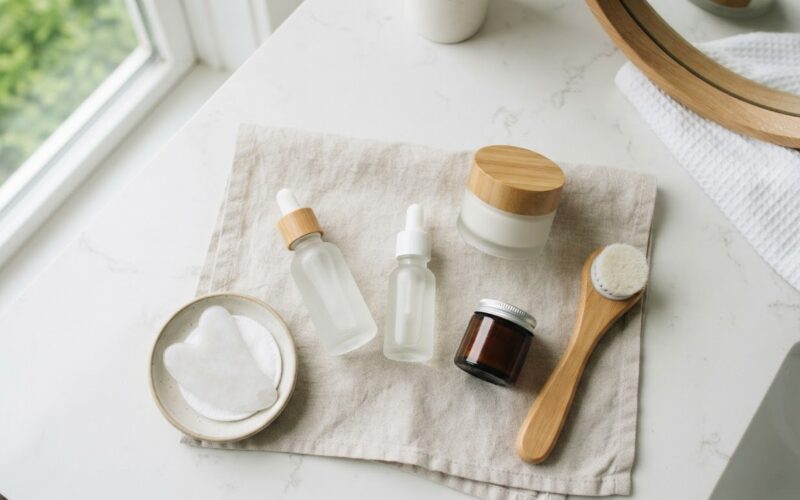
Walk down any skincare aisle or open any beauty app and you could be forgiven for thinking that healthy skin requires a dozen products, a ten-step routine, and a chemistry degree to understand the ingredients. The industry benefits from making it seem complicated, but the truth is that a good skincare routine rests on just a few fundamentals, and for a beginner, simple is not only easier but genuinely better. You do not need an overflowing shelf of products to take good care of your skin. You need a handful of basics used consistently.
Skincare at its heart is about keeping your skin clean, hydrated, and protected, and once you understand those core aims, the endless products sort themselves into a clear hierarchy of what actually matters and what is optional. This guide lays out a straightforward routine anyone can start with, along with how to tailor it to your skin and introduce new products safely. The goal is healthy, comfortable skin, not perfection, and the basics get you most of the way there.
The three steps that matter most
If you do nothing else, a simple and effective routine comes down to three core steps. Cleansing removes dirt, oil, and impurities that build up through the day, and a gentle cleanser used morning and evening keeps your skin fresh without stripping it. Moisturizing hydrates the skin and supports its protective barrier, which every skin type needs, including oily skin. And sun protection, applying sunscreen during the day, is the single most important thing you can do for your skin’s long-term health, protecting it from damage and premature aging. Master these three and you have the foundation that everything else builds on.
Know your skin type
Choosing products that suit your skin makes a real difference, so it helps to have a rough sense of your skin type, whether it tends to be oily, dry, combination, or sensitive. Someone with oily skin benefits from lighter, oil-free formulas, while dry skin appreciates richer, more hydrating ones, and sensitive skin does best with gentle, fragrance-free products. You do not need a precise diagnosis to begin, and paying attention to how your skin feels and responds over time teaches you what works. When in doubt, gentle and simple is a safe default for nearly everyone.
Morning versus evening
Your routine can differ slightly between morning and night, guided by what your skin needs at each time. In the morning, the emphasis is on protection, so cleansing, moisturizing, and applying sunscreen prepares your skin for the day. In the evening, the emphasis shifts to cleaning away the day’s buildup and, importantly, removing any makeup before you sleep, followed by moisturizing to support your skin overnight. This simple morning-and-evening rhythm covers the essentials without requiring an elaborate production at either end of the day.
Introduce products slowly
A common beginner mistake is buying many products at once and using them all immediately, which overwhelms your skin and makes it impossible to tell what is helping or causing a reaction. Introducing new products one at a time, giving each a few weeks before adding another, lets you see how your skin responds and pinpoint any culprit if irritation appears. Patch testing a new product on a small area first is a smart precaution, especially for sensitive skin. Patience here protects your skin and your wallet. The American Academy of Dermatology at aad.org offers trustworthy, dermatologist-backed guidance on building a routine.
Consistency beats complexity
Perhaps the most important principle of all is that a simple routine followed consistently beats an elaborate one used sporadically. Skin responds to regular care over time, not to occasional intensive efforts, so the three basics done faithfully every day will serve you far better than a complicated regimen you abandon. If you have specific concerns or persistent issues that basic care does not resolve, seeing a dermatologist for personalized advice is worthwhile, since they can guide you far better than trial and error or internet trends.
Frequently asked questions
What is a good skincare routine for beginners?
A simple, effective beginner routine centers on three core steps: cleansing to remove dirt and oil, moisturizing to hydrate and support the skin barrier, and applying sunscreen during the day for protection. Doing these consistently, morning and evening, covers the fundamentals. You can tailor the specific products to your skin type, but this simple foundation is what matters most for healthy skin.
What order should I apply skincare products?
A general rule is to apply products from thinnest to thickest consistency. For a basic routine, that means cleansing first, then moisturizer, and finally sunscreen in the morning as the last step. In the evening, cleanse and remove any makeup, then moisturize. Keeping the routine simple makes the order easy, and consistency matters more than adding complicated extra steps.
Do I really need sunscreen every day?
Daily sun protection is widely regarded as the single most important thing you can do for your skin’s long-term health, helping protect against damage and premature aging. Dermatologists consistently emphasize it as an essential step, not an optional one. Making sunscreen a daily habit, even on cloudy days and indoors near windows, is one of the highest-impact skincare choices you can make.
How long does it take to see results from a skincare routine?
Skin responds gradually, so patience is important, and it often takes several weeks of consistent care to notice meaningful changes. This is also why introducing products slowly matters, since it lets you judge each one fairly. A simple routine followed faithfully over time produces better results than an elaborate one used sporadically. If concerns persist, a dermatologist can offer personalized help.
Keep it simple, keep it consistent
Good skincare is not about owning the most products or following the most steps. It is about cleansing, moisturizing, and protecting your skin consistently, choosing gentle products suited to you, and introducing anything new with patience. Start with the basics, stay consistent, and let your skin benefit over time. To keep improving, see our guides on common skincare mistakes to avoid and creating a natural everyday makeup look. Find more in the Beauty section.