Ryan Preece had never won a NASCAR Cup Series points race. On Saturday night at Daytona, in overtime, in the last race before the playoffs, with wreck damage on his car from the first stage, he won one and took the final postseason spot away from a driver who had walked in 31 points ahead of him. If you script that, nobody buys it.
How the Race Ended
The Coke Zero Sugar 400 went to overtime after a multi car crash on what should have been the last lap. Zane Smith went into the wall and Erik Jones collected Carson Hocevar, bringing out a caution with Preece leading.
He held it through the restart. Daniel Suarez finished second, with Michael McDowell and Tyler Reddick filling out the top four and Ricky Stenhouse Jr. fifth.
The Car Should Not Have Been There
Preece took wreck damage in Stage 1. In a superspeedway race, damage usually ends any realistic chance, because aerodynamics decide whether a car can hold position in the pack.
The number 60 team repaired it, kept him in the race, and then stretched fuel through the final stage to put him in position when it mattered. That is a strategy call made by people who understood they had exactly one path and took it.
Shane van Gisbergen Lost It on Pit Road
Van Gisbergen came into Daytona with a 31 point cushion over Preece for the final playoff berth. He left eliminated by 17 points.
The mechanism was pit strategy. A call left him 27th for the overtime restart, and 27th is where he finished. There is no dramatic crash to point at and no mechanical failure. He simply ended up in the wrong part of the field at the only moment that counted, and Daytona does not give that position back in two laps.
The Rest of the Playoff Picture
Austin Cindric took the 15th seed with a sixth place finish. Bubba Wallace clinched 14th. Denny Hamlin enters the postseason as the number one seed, 25 points clear of the field.
The regular season finale at Daytona exists specifically to produce this kind of chaos, and it delivered. A restrictor plate style pack race as the last qualifying opportunity means the standings can be rewritten by a caution that has nothing to do with the drivers involved.
What Preece Said
“I’m just speechless right now,” he said, before adding the line that has been circulating since: “when you put our back against the wall, we swing hard.”
Preece has spent his career on the margins of full time Cup rides, moving between teams and equipment, and has been a respected short track racer far longer than he has been a household name. A first win in a regular season finale that also qualifies him for the playoffs is about as much value as one afternoon can hold.
What This Does to the Chase
It puts a driver in the playoff field who arrives with nothing to lose, which changes how the first round behaves. Seeded 16th, Preece needs a win to advance rather than points accumulation, and drivers in that position race differently.
Superspeedway winners have historically been treated as playoff filler. The counterargument is that this particular win came from repaired damage and fuel management rather than pure luck in the draft, which is a different kind of result.
Where the Playoffs Start
The postseason opens with the Cook Out Southern 500 at Darlington on September 6. Darlington is the opposite of Daytona in almost every respect: a narrow, abrasive, egg shaped track where car control and tire management decide everything and pack racing does not exist.
Going from the most random race on the calendar to one of the most skill dependent in a single week is a deliberate piece of scheduling.
The Other Thing That Happened at Daytona
Race day at the speedway produced a second story that had nothing to do with the standings. Tom Cruise turned up in the infield with Anne Hathaway and announced a Days of Thunder sequel, dated for June 2028, with a Cup car in the original film’s livery parked behind them.
For a sport that has spent a decade working on mainstream visibility, having its regular season finale end in an overtime upset and its most famous movie announce a sequel on the same afternoon is an unusually good day.
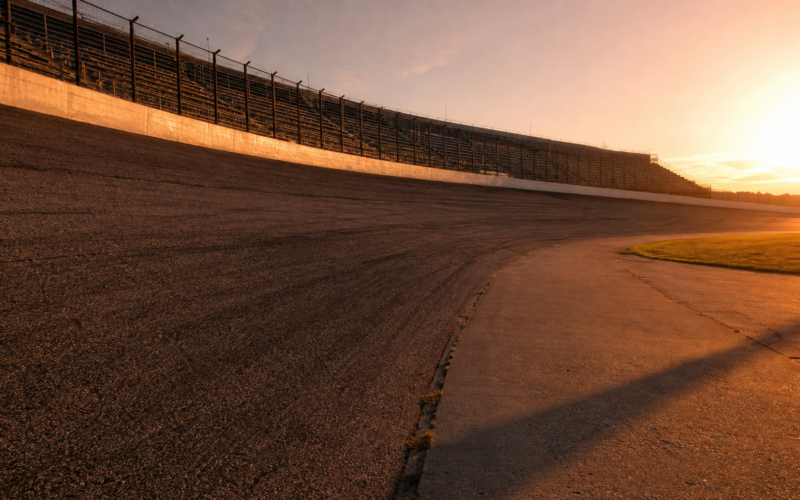
It is worth being clear about what a superspeedway finale actually is. Daytona and Talladega produce racing where the entire field runs within a few car lengths at close to 200 miles an hour, and where a single mistake anywhere in the pack takes out a dozen cars that had nothing to do with it. Skill matters, but so does position, timing, and luck in a way it does not at any other kind of track.
Putting that race last in the regular season is a deliberate design decision. It guarantees that the final playoff berth can be decided by circumstance rather than by season long performance, and it produces exactly the kind of night that happened on Saturday. Purists have argued against the format for years on the grounds that it rewards randomness. The counterargument is that it produced a first time winner, a genuine underdog story, and a regular season finale that people actually watched to the end.
Both things can be true. Van Gisbergen had a better season than Preece by any measure available, and Preece is the one going to Darlington.
Frequently Asked Questions
Who won at Daytona?
Ryan Preece won the Coke Zero Sugar 400 in overtime on Saturday, August 29, 2026. It was his first career Cup Series points win.
Did he make the playoffs?
Yes. The win gave him the 16th and final berth, 17 points ahead of Shane van Gisbergen.
How did Shane van Gisbergen miss out?
He entered 31 points ahead but a pit strategy call left him 27th for the overtime restart, and he finished 27th.
Who else clinched?
Austin Cindric took the 15th seed with a sixth place finish and Bubba Wallace clinched 14th. Denny Hamlin is the number one seed.
What caused the overtime?
A last lap crash involving Zane Smith, Erik Jones, and Carson Hocevar brought out a caution with Preece leading.
When do the playoffs start?
The Cook Out Southern 500 at Darlington on September 6, 2026.