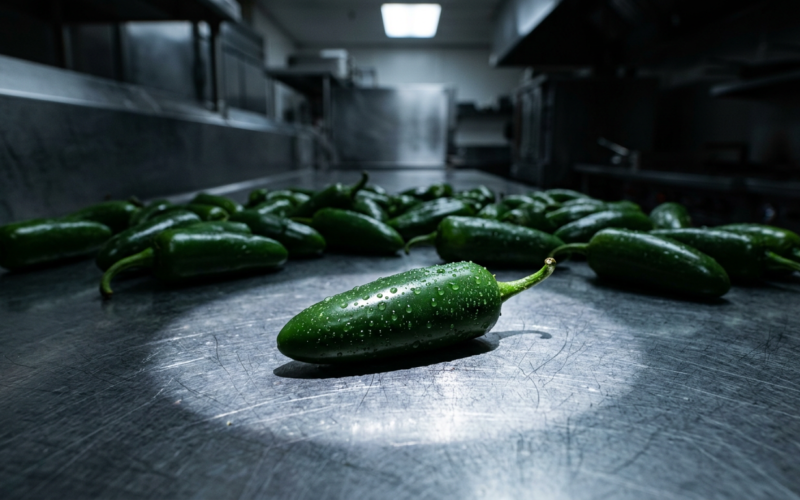
A Salmonella outbreak traced to fresh jalapenos has now sickened 345 people across 27 states, hospitalized 36 of them, and the recalls are still expanding almost two weeks after they started.
If you have bought salsa, guacamole or pico de gallo in the last month, this one is worth two minutes of your attention.
The Scale of It
The Centers for Disease Control and Prevention has confirmed 345 illnesses across 27 states with 36 hospitalizations. No deaths have been reported.
Illness onset dates run from June 19 through July 20, which means the contamination was circulating for weeks before anyone connected the cases. That lag is normal for Salmonella and it is also why the case count has kept climbing.
Where It Came From
Investigators traced the outbreak to fresh jalapenos from a single grower in Sinaloa, Mexico, distributed through Coast Citrus Distributors.
One grower is the important detail. It means the contamination entered the supply chain at a single point and then fanned out through everyone who bought from that distributor, which is why the recall list keeps growing in a way that feels disorganized. It is not disorganized. It is one ingredient turning up in a lot of different products.
The Recall Timeline
It started on August 9 with Taylor Farms and Taylor Fresh Foods pulling products across 27 states.
Whole Foods Market followed on August 12, recalling salsas, guacamole and pico de gallo across 12 states. NatureBest recalled pico de gallo and stuffed mushrooms in Texas and Louisiana on August 14. H-E-B has also issued recalls. Reporting has additionally tied the contaminated supply to some Chipotle and Qdoba locations.
Why It Is Still Growing
The FDA last updated its outbreak page on August 14 and reporting on August 17 confirmed the recalls were continuing to expand.
Fresh produce distribution is genuinely difficult to trace backward. A distributor sells to a processor, the processor sells to a retailer and a restaurant group, and each of those sells to more. Every step outward takes days to identify and every identification produces a new recall notice. Expect more names, not fewer, over the next week.
What Salmonella Actually Does
Symptoms usually start six hours to six days after exposure and include diarrhea, fever and stomach cramps. Most healthy adults recover in four to seven days without treatment.
The people who get seriously ill are adults over 65, children under 5, and anyone with a weakened immune system. Thirty six hospitalizations out of 345 confirmed cases is roughly one in ten, which is on the higher side and reflects who tends to get tested in the first place.
What to Do Right Now
Check your refrigerator for prepared salsa, guacamole, pico de gallo and any fresh salsa purchased since mid July, and check the recall notices from Taylor Farms, Whole Foods, NatureBest and H-E-B directly rather than relying on a summary.
If a product is on a recall list, throw it out or return it. Do not taste it to check. Wash any surface or container it touched with hot soapy water, because Salmonella transfers readily to cutting boards and refrigerator shelves.
The Part Nobody Talks About
Jalapenos are an ingredient, not a product. They go into things that carry a different brand’s name on the front, which is why a single grower in Sinaloa can end up implicated in items from a national grocery chain, a regional Texas retailer and two fast casual restaurant chains simultaneously.
This is the structural weakness in fresh produce recalls. Consumers are asked to track brand names when the actual hazard is an anonymous input three steps upstream that never appears on a label. For more on how supply questions reach ordinary consumers, see our coverage of Nike’s rough week on the market.
Fresh jalapenos have a short shelf life, so the raw ingredient is likely out of circulation. Prepared products with longer dates are the ongoing risk, and those are the ones sitting in refrigerators right now.
How long this lasts is partly a shelf life question. The case count will keep rising for a while regardless. Reporting delays mean the CDC is always counting illnesses that happened weeks ago, so a growing number does not necessarily mean people are still getting sick today.
Why Jalapenos Keep Showing Up in Outbreaks
If this feels familiar, it should. Peppers have been at the center of several large produce outbreaks over the past two decades, including a major Salmonella event in 2008 that was initially blamed on tomatoes before investigators landed on jalapenos and serrano peppers.
This is not the first time. Peppers have a difficult combination of traits from a food safety standpoint: they grow close to the ground, they are irrigated heavily, they have textured skin that traps bacteria, and they are overwhelmingly eaten raw.
Cooking kills Salmonella. Almost nothing that jalapenos go into gets cooked. Salsa, guacamole, pico de gallo and garnish are all raw applications, which removes the one step that would otherwise make the contamination irrelevant.
There is no processing fix for that. The only real controls are upstream, at the farm and in the water used to irrigate and wash, which is exactly where oversight of imported produce is thinnest.
Frequently Asked Questions
How many people are sick?
345 confirmed cases across 27 states with 36 hospitalizations and no reported deaths, according to the CDC.
What caused the outbreak?
Fresh jalapenos from a single grower in Sinaloa, Mexico, distributed by Coast Citrus Distributors.
Which brands have been recalled?
Taylor Farms and Taylor Fresh Foods, Whole Foods Market, NatureBest and H-E-B, with reporting also linking some Chipotle and Qdoba locations.
What are the symptoms of Salmonella?
Diarrhea, fever and stomach cramps beginning six hours to six days after exposure. Most healthy adults recover in four to seven days.
Who is most at risk?
Adults over 65, children under 5, and people with weakened immune systems.
Is the outbreak over?
No. Recalls were still expanding as of August 17 and the FDA investigation remains open.