
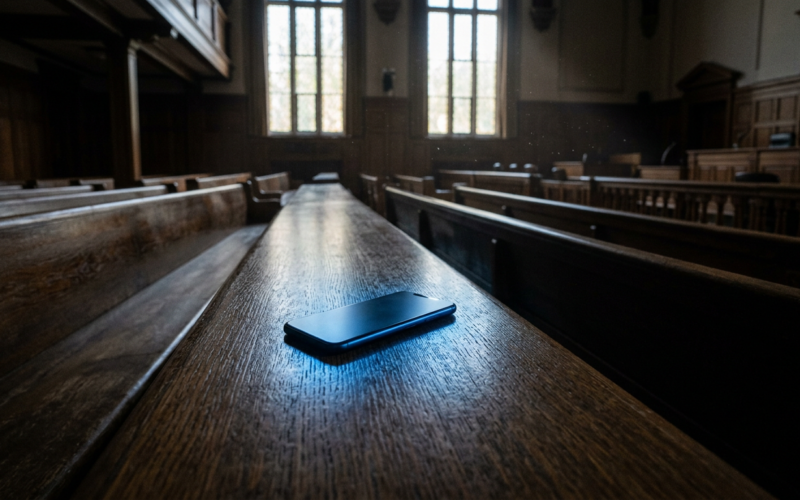
The trial that could reshape how social media companies build products for teenagers began Tuesday in an Oakland courtroom, and the opening line from the state of California was blunt. Meta’s business model, the deputy attorney general said, was to hook the users, hold them for as long as they can, harvest their data.
Mark Zuckerberg is expected to testify. The trial is scheduled to run six to eight weeks.
What This Case Actually Is
Four states are trying this one: California, Colorado, Kentucky and New Jersey. They are the leading edge of a much larger action in which 29 states sued Meta in 2023. The remaining 25 go to trial later, which makes this a test run for a legal theory with an enormous tail.
The venue is the US District Court for the Northern District of California in Oakland, before Judge Yvonne Gonzalez Rogers, who handled Epic versus Apple and is not known for being impressed by tech company framing.
The Two Allegations
The first is design. The states argue Meta deliberately engineered Facebook and Instagram to be compulsive for young users, using infinite scroll, variable reward notifications and algorithmic feeds tuned for engagement rather than wellbeing, while publicly claiming otherwise.
The second is narrower and legally sharper. The states allege Meta collected data from children under 13 without parental consent, which runs into the Children’s Online Privacy Protection Act. Design claims are hard to prove. Consent violations are documentary.
The Number That Will Get Quoted All Week
The theoretical maximum penalty has been calculated at roughly 1.4 trillion dollars. You will see that figure everywhere and it is worth understanding what it is.
It comes from stacking statutory per violation penalties across every alleged instance. Legal experts across the board consider it unrealistic as an actual outcome. What is realistic is a large settlement plus injunctive relief, which is to say a court telling Meta how it is allowed to design products for minors. The second part is what the company actually fears.
There Is Already a Verdict on the Board
This is not the first swing. In January 2026 a trial found Meta and YouTube liable for addictive design and awarded six million dollars to the lead plaintiff.
Six million is a rounding error to Meta. The precedent is not. A jury accepted that a platform’s design choices can constitute a legal harm, and every subsequent case gets to point at that.
Why Zuckerberg on the Stand Matters
Executives testifying in person changes cases. Documents get argued about. A chief executive answering questions about internal research on teen mental health, in front of a jury, under oath, produces the kind of moment that lands outside the courtroom.
Meta’s defense is expected to lean on parental controls, teen account settings and the argument that correlation between usage and distress is not causation. That is a defensible position scientifically. It is a harder one to deliver warmly to a jury.
The Broader Squeeze on Platform Design
This trial lands inside a wider shift. States have passed age verification laws, app stores have added parental approval layers, and several countries have moved toward outright minimum age requirements for social platforms.
The industry has generally treated these as compliance problems. A liability verdict turns them into product problems, which is a different budget and a different set of engineers. For more on how quickly platform infrastructure decisions can reshape a market, see our piece on Cursor shipping its own git forge as GitHub went dark.
The Evidence Problem Meta Cannot Settle Around
The reason this case is dangerous for Meta is not the addiction argument. It is that the addiction argument gets proved with the company’s own material. Internal research, product review documents, engagement dashboards and executive email are all in play, and the states have had three years of discovery to sort through them.
Meta has spent a decade arguing in public that the science on social media and adolescent mental health is unsettled. That is broadly true in the academic literature. It becomes a much weaker position if a jury hears the company’s own researchers saying something more definite in private, which is exactly the dynamic that made the 2021 disclosures so damaging.
Settlements make plaintiffs go away. They do not un ring the bell on documents already entered into a public record, and four states going first means the material surfaces before the other 25 even begin.
What to Watch Over Six Weeks
Three things. Whether the under 13 data claims produce documents that are hard to explain. Whether Meta’s own internal research gets read aloud. And whether Judge Gonzalez Rogers signals interest in injunctive remedies, because that is the outcome with consequences beyond the four states in the room.
The other 25 states are watching the same three things, and they get to adjust before their turn. That sequencing is the quiet advantage in this litigation. Whatever works in Oakland gets refined and run again, and whatever fails gets dropped, which means Meta has to win a version of this argument repeatedly while its opponents only have to win it once.
Frequently Asked Questions
Who is suing Meta in this trial?
California, Colorado, Kentucky and New Jersey. They are part of a group of 29 states that sued Meta in 2023, with the other 25 going to trial later.
What is Meta accused of?
Designing Facebook and Instagram to be addictive for young users, and collecting data from children under 13 without parental consent.
Will Mark Zuckerberg testify?
He is expected to. A specific date has not been made public.
Could Meta really pay 1.4 trillion dollars?
That figure is a theoretical maximum from stacking statutory penalties. Legal experts consider it unrealistic. A settlement plus court ordered design changes is the likelier outcome.
Has a court ruled on this before?
Yes. In January 2026 a trial found Meta and YouTube liable for addictive design and awarded six million dollars to the lead plaintiff.
How long will the trial last?
Six to eight weeks, according to court estimates.