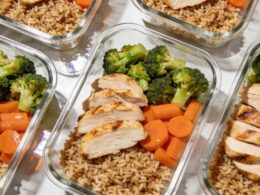
Almost everyone has tried meal prep at least once. You buy the containers, spend a hopeful Sunday afternoon cooking, stack a fridge full of identical lunches, and feel briefly invincible. Then by Wednesday the enthusiasm fades, by Thursday you are ordering takeout, and the containers sit unused until you quietly give up. If that cycle sounds familiar, the problem is almost never willpower. It is the approach. This is a practical guide to meal prep that actually survives contact with a real, busy week.
Why most meal prep fails
The usual failure has three causes. The first is boredom: cooking five identical portions of the same dish guarantees you will be sick of it by midweek. The second is over ambition: trying to prep every meal for seven days in one marathon session is exhausting and fragile, because one skipped Sunday collapses the whole system. The third is rigidity: a plan that cannot flex around a last minute dinner invite or a tiring day feels like a cage, and people abandon cages. Fix those three things and prep suddenly sticks.
Prep components, not full meals
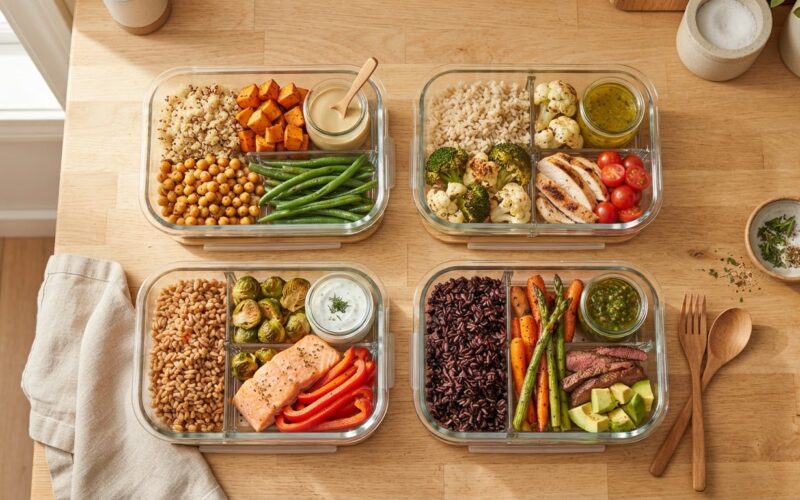
The single most useful shift is to stop cooking finished meals and start cooking flexible components. Roast a big tray of vegetables, cook a pot of a grain like rice or quinoa, prepare one or two proteins, and make a sauce or two. Instead of five identical boxes, you now have building blocks you can combine differently each day: a grain bowl today, a wrap tomorrow, a quick stir fry the day after. Variety comes for free, and nothing goes stale because you are mixing rather than repeating.
Start with two or three days, not seven
Ambition kills consistency. Rather than attempting a full week, prep for two or three days at a time. A shorter horizon means fresher food, less waste, and a smaller, less intimidating cooking session that you are far more likely to actually repeat. Many people find that two lighter prep sessions across the week, say Sunday and Wednesday, work better than one heroic Sunday marathon that leaves them dreading the kitchen.
Build a simple formula
A reliable meal usually follows a basic template: a protein, a carbohydrate, a vegetable, and something with flavor and fat like a sauce, dressing, or handful of nuts. Once you internalize that formula, you can assemble a satisfying plate from whatever components you prepped without following a recipe at all. This is the skill that separates people who meal prep for a month from people who meal prep for years. The formula, not the recipe, is what makes it sustainable.
Store it so it survives
Good storage is quietly the difference between success and a fridge full of sad, soggy food. Keep dressings and sauces separate until you eat, so nothing turns mushy. Let hot food cool before sealing it to reduce condensation. Store crisp elements like greens apart from wet ones. Clear containers help too, because food you can see is food you actually eat, while anything hidden in an opaque tub tends to be forgotten until it is past saving.
Make it part of a weekly rhythm
Prep works best when it is anchored to an existing routine rather than treated as a separate chore. Many people fold it into a broader weekly reset, pairing a short cooking session with tidying, planning, and setting up for the days ahead. Attaching prep to a habit you already have makes it far more durable than relying on motivation alone. If you want a template for that kind of gentle weekly reset, our guide to small Sunday routines pairs perfectly with a cooking session.
Give yourself permission to flex
Finally, build in flexibility on purpose. Plan for one or two nights where you know you will eat out or want something different, and prep a little less to match. A plan that expects real life to happen is one you will keep. The goal is not a rigid, joyless system of identical boxes. It is a small, repeatable habit that quietly removes decisions from your week, saves money, and means there is almost always something good and ready when you are hungry and tired.
Frequently Asked Questions
Why does my meal prep always fail by midweek? Usually because of boredom from identical meals, over ambition in prepping too much at once, and rigid plans that cannot flex around real life.
What should I prep instead of full meals? Prep flexible components like roasted vegetables, a cooked grain, one or two proteins, and a couple of sauces, then combine them differently each day.
How many days should I prep at once? Two or three days is more sustainable than a full week. It keeps food fresh and makes each session small enough to repeat.
What is a simple meal formula? A protein, a carbohydrate, a vegetable, and something flavorful like a sauce or nuts. Learn the formula and you rarely need a recipe.
How do I keep prepped food from going soggy? Store sauces separately, cool hot food before sealing, and keep crisp items apart from wet ones. Clear containers help you actually eat it.
How do I make the habit stick? Anchor prep to an existing weekly routine and build in flexibility for nights you eat out, so the plan bends instead of breaking.