
Few parenting topics generate as much guilt and confusion as screen time. Parents hear that screens are quietly rewiring their children’s brains one moment and that technology fluency is an essential modern skill the next, and somewhere between those two alarms they are simply trying to get through a phone call or make dinner in peace. The reassuring truth is that the actual expert guidance is far calmer and more reasonable than the noise surrounding it, and understanding what the recommendations really say can replace a great deal of that guilt with a workable plan.
The goal of any screen time approach is not to hit a perfect number or to eliminate screens entirely, which is neither realistic nor necessary. It is to make sure that screens support a child’s development rather than crowd out the things that matter most, which are sleep, physical activity, real conversation, and unstructured play. With that frame in mind, the age-based guidance becomes much easier to apply.
What the guidelines actually recommend
Pediatric experts break their recommendations down by age, and the logic behind each stage is worth understanding rather than just memorizing. For babies under about eighteen months, the advice is to avoid screen media other than video chatting with family, because the youngest children learn through real interaction and hands-on exploration in ways a screen cannot replicate. Between eighteen and twenty-four months, if parents want to introduce screens, the guidance is to choose high-quality programming and to watch it together, so the experience becomes shared and interactive rather than solitary.
For children between two and five, the common recommendation is to limit screen use to about an hour per day of high-quality content, ideally viewed alongside a caregiver who can help them understand and connect what they see to the world around them. For school-aged children and older, the guidance shifts away from a strict clock and toward consistent, sensible limits that protect sleep, physical activity, schoolwork, and family time. The message across every age is consistent, which is that screens should have a defined place rather than an open-ended one.
Why quality matters more than a stopwatch
Fixating on the exact number of minutes misses the more important question, which is what a child is actually doing on the screen. Not all screen time is equal. A video chat with a grandparent, an educational program watched and discussed with a parent, or a creative app that encourages a child to build and imagine is a very different experience from passively scrolling through an endless feed of fast, mindless clips. The content and the context shape the effect far more than the raw total.
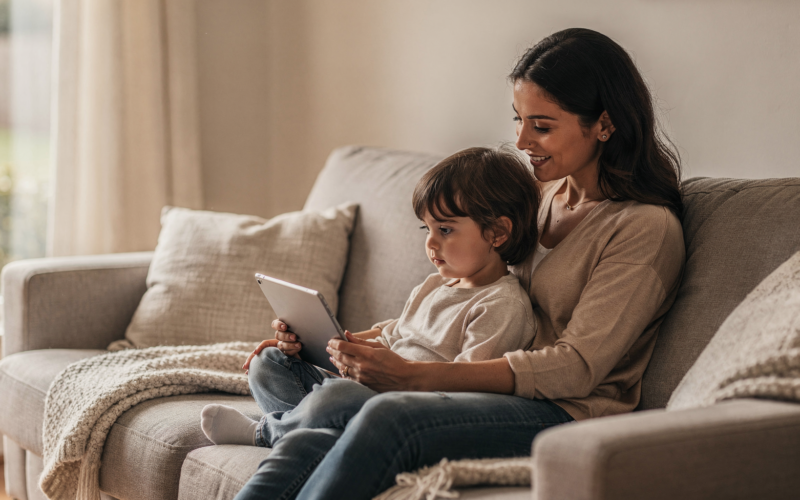
This is why experts increasingly talk about the quality of media and whether it is shared rather than obsessing over a stopwatch. When you watch alongside your child, ask questions about what you are seeing, and choose content that is age-appropriate and enriching, even a modest amount of screen time can become a positive, connecting experience rather than a source of worry.
Managing screens without a daily battle
The practical challenge is rarely understanding the guidelines and usually enforcing them without turning every day into a negotiation. Consistency is what makes limits work, because children push hardest against rules that seem to shift with a parent’s mood. Setting clear, predictable expectations, such as no screens during meals or in the hour before bed, gives everyone a rhythm to rely on and removes the constant renegotiation.
Creating screen-free zones and times helps enormously, particularly around sleep, since the light and stimulation from devices can genuinely interfere with a child’s ability to wind down. It also helps to give a warning before screen time ends rather than switching a device off mid-moment, which softens the transition and reduces the meltdown. And building in plenty of appealing alternatives, from outdoor play to games and crafts, means screens are competing with genuinely fun options rather than boredom.
Your own habits are part of the plan
Children learn what to do with technology largely by watching the adults around them, which means your relationship with your own phone is quietly part of your child’s screen education. If devices are constantly in hand at the dinner table and during conversations, no rule about the child’s screen time will feel entirely fair or land entirely well. Modeling the behavior you want to see, and carving out device-free family time, teaches more than any limit you set.
Many families find it helpful to create a shared plan for how and when screens are used in the home, tailored to their children’s ages and their own values. The American Academy of Pediatrics offers a helpful framework and up-to-date guidance for building one at HealthyChildren.org, which is a trustworthy resource when you want expert advice rather than internet panic.
Frequently asked questions
How much screen time is okay by age?
General guidance suggests avoiding screens other than video chatting for babies under eighteen months, introducing high-quality content watched together from eighteen to twenty-four months, limiting two to five year olds to about an hour a day of quality programming, and setting consistent, sensible limits for older children that protect sleep, activity, and family time. Quality and context matter as much as the exact number.
Is all screen time bad for kids?
No. What a child does on a screen matters more than the screen itself. Video calls with family, educational content watched and discussed with a parent, and creative apps can be genuinely positive, while passive scrolling through fast, mindless content is far less beneficial. Focusing on high-quality, shared screen time changes the picture considerably.
How do I get my child to stop screaming when screen time ends?
Predictability and warnings are the keys. Give a heads-up a few minutes before screens go off rather than ending abruptly, keep the limits consistent so they are not a daily surprise, and have an appealing next activity ready to ease the transition. Over time, reliable routines make the end of screen time far less of a battle.
Does screen time before bed really affect sleep?
Yes, it can. The light and stimulation from devices can make it harder for children to wind down and fall asleep, which is why many experts recommend a screen-free period in the hour before bed. Replacing evening screens with calmer routines like reading supports better, more restful sleep.
Trade guilt for a plan
Screen time does not have to be a source of constant worry. When you understand what the guidance actually recommends, focus on quality and shared viewing over a rigid stopwatch, set consistent limits, and model healthy habits yourself, screens take their proper place as one part of a full and balanced childhood. For plenty of engaging things to fill the non-screen hours, see our guide to fun indoor activities for kids, and find more in the Parenting and Family section.