
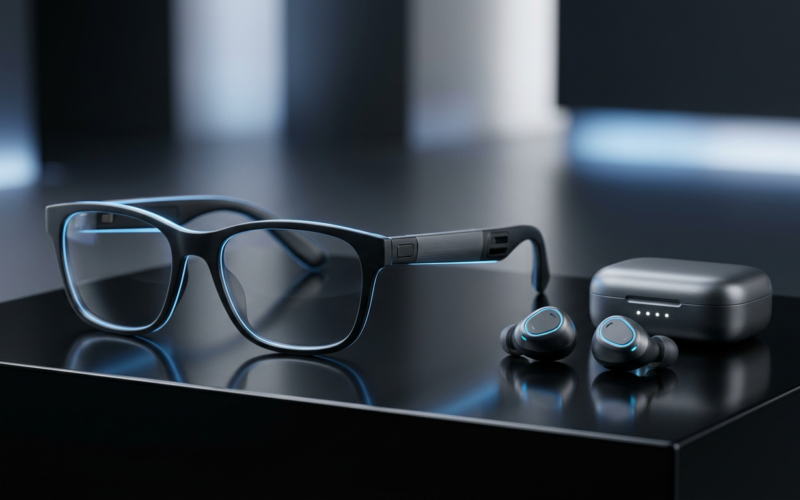
The quiet rise of wearable AI is one of the most interesting tech shifts to watch in 2026. Smart glasses, AI-enabled earbuds, and pins that promise hands-free assistance are moving from novelty gadgets toward everyday tools. Whether this category truly takes off or fizzles, the momentum behind wearable AI is worth understanding right now.
What Wearable AI Really Is
Wearable AI refers to devices you wear that use artificial intelligence to assist you in real time. Instead of pulling out a phone, the idea is that a pair of glasses or a small clip can listen, see, translate, remind, and answer questions on the fly. The promise is a more seamless, less screen-dependent way to interact with technology.
Why the Category Is Heating Up
Several trends are converging. AI models have become dramatically more capable, hardware has shrunk, and battery efficiency has improved. Major tech companies see wearables as the next frontier after smartphones, and that competition is pushing rapid experimentation and investment across the industry.
The Appeal of Hands-Free Help
The core selling point is convenience. Imagine getting directions, translations, or reminders without reaching for a device. For people who are busy, on the move, or simply tired of staring at screens, hands-free assistance is a genuinely appealing pitch that taps into real everyday frustrations.
The Privacy Questions Nobody Can Ignore
Wearables that can see and hear your surroundings raise obvious privacy concerns, both for the wearer and for the people around them. Always-on cameras and microphones make bystanders uneasy, and companies must be transparent about what is recorded and stored. How the industry handles this will shape public trust and adoption.
The Battery and Design Balancing Act
Cramming powerful AI features into a small, comfortable device is a hard engineering problem. More capability usually means more power draw, and nobody wants a wearable that dies by lunch or feels bulky. The winners in this space will be those who nail the balance between features, comfort, and battery life.
Where Wearable AI Could Shine
Some use cases stand out immediately. Real-time translation could transform travel, accessibility features could assist people with visual or hearing challenges, and hands-free capture could help professionals in the field. These practical, high-value applications may prove more durable than flashy demos.
The Skeptics Have a Point
Not everyone is convinced. Early attempts at AI wearables have drawn criticism for limited usefulness, awkward design, and questions about whether they solve real problems. Healthy skepticism is warranted, and the category still has to prove it offers something a smartphone cannot already do better.
What to Watch in the Months Ahead
Keep an eye on how major players position their devices and whether prices come down enough for mainstream buyers. For more on how AI is reshaping the products and debates around us, our look at open-source AI explores another force driving this fast-moving space.
Frequently Asked Questions
What is wearable AI? It is technology you wear, such as smart glasses or AI earbuds, that uses artificial intelligence to assist you in real time.
Why is wearable AI trending in 2026? Advances in AI models, smaller hardware, and better batteries have converged, and major companies see wearables as the next big platform.
Are there privacy concerns with wearable AI? Yes, devices with cameras and microphones raise concerns for both wearers and bystanders, making transparency essential.
What are the best uses for wearable AI? Real-time translation, accessibility features, and hands-free capture are among the most practical and valuable applications.
Is wearable AI worth buying right now? That depends on your needs, as the category is still maturing and some early devices have faced criticism for limited usefulness.
Will wearable AI replace smartphones? Not soon, but many see it as a complementary platform that could reduce how often people reach for their phones.