Toy Story 5 is trending, and for a certain generation of parents the news lands with an unexpected weight. These films have always been sneakily about grown-up things: attachment, growing up, letting go, and the quiet grief of a kid outgrowing the things they loved. As a jumping-off point for thinking about how children bond with their toys, and how we handle it as parents, the timing is perfect.
Why kids bond so hard with toys
To a young child, a favorite toy is not just an object. It is a companion, a security blanket, and a rehearsal space for real relationships all at once. Child development experts have long recognized these attachments as healthy and important. The stuffed animal that must come everywhere is doing real emotional work, helping a child feel safe when a parent cannot be right there.
What imaginative play actually builds
When a child gives a toy a voice and a story, they are practicing some of the most sophisticated skills a human develops. Pretend play builds language, empathy, problem solving, and the ability to imagine another mind. The child staging elaborate dramas on the living room floor is not just passing time. They are quietly rehearsing how to be a person.
Quality over quantity
Research and plain observation agree on something most toy marketing would rather you forget: kids play more deeply with fewer toys. A smaller, well-chosen collection invites focus and creativity, while an overwhelming pile leads to shallow, scattered play. Before the next birthday haul, it is worth asking whether more toys actually serve your child or just fill space.
The open-ended toy advantage
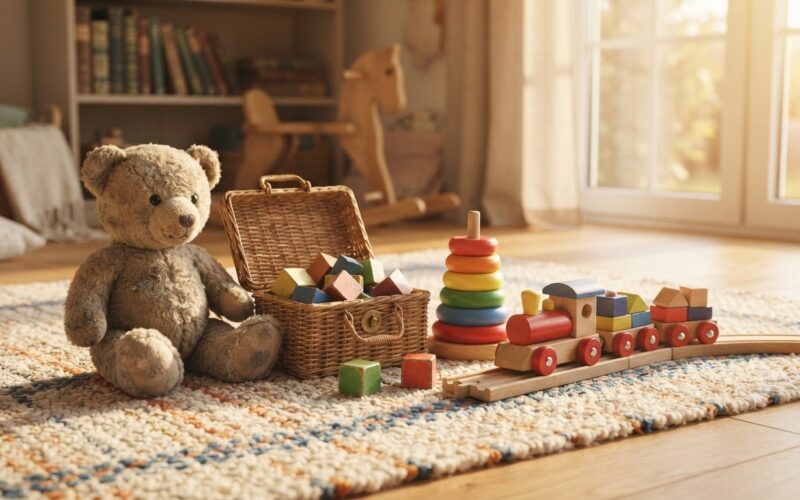
The toys that get played with for years tend to be the simplest: blocks, figures, art supplies, things with no single right way to use them. Open-ended toys grow with a child and support genuine creativity, whereas single-function electronic gadgets often entertain briefly and then gather dust. When choosing, favor the toy that asks the child to bring the imagination.
Handling the outgrowing gracefully
This is the emotional heart of the Toy Story films, and it matters in real homes too. Children outgrow toys at their own pace, and rushing that process can sting. Let a child keep a beloved item longer than seems logical. The attachment fades naturally, and forcing the goodbye teaches a harsher lesson about loss than a young child needs to learn.
Teaching kids to let go and give back
When a child is genuinely ready, passing toys along can be a lovely lesson in generosity. Involving them in choosing which toys to donate turns decluttering into an act of kindness rather than a loss. The framing matters enormously: these toys will make another child happy is a very different message than we are getting rid of your stuff. Our piece on why kids gravitate to certain characters pairs well with thinking about these bonds.
Screens versus physical play
None of this means banning screens, but the balance is worth watching. Physical, hands-on play develops motor skills, spatial reasoning, and social ability in ways passive screen time does not. The goal is not zero screens. It is making sure the tactile, imaginative, made-up-on-the-spot kind of play still has plenty of room in the day.
Playing alongside your child
The most valuable thing you can add to any toy is your attention. Getting on the floor and following your child’s lead in play, letting them direct the story, strengthens your bond and models rich imaginative thinking. It costs nothing and children remember it long after they have forgotten which specific toy they were obsessed with that year.
Frequently Asked Questions
Is it normal for my child to be so attached to one toy?
Completely. Strong attachment to a comfort object is a healthy, well-documented part of development that helps children feel secure.
How many toys does a child actually need?
Fewer than most homes have. Children play more deeply and creatively with a smaller, well-chosen selection than with an overwhelming pile.
What kinds of toys are best?
Open-ended toys like blocks, figures, and art supplies. They grow with the child and invite imagination, unlike single-function gadgets.
When should I get rid of old toys?
Wait until your child is genuinely ready, and involve them in the choice. Rushing it can feel like a real loss to a young child.
How do I make donating toys a positive experience?
Frame it around generosity. Explaining that another child will love the toy turns letting go into an act of kindness rather than deprivation.
Should I limit screen time in favor of toys?
Balance is the goal rather than a ban. Ensure hands-on, imaginative play has plenty of daily space alongside any screen time.