
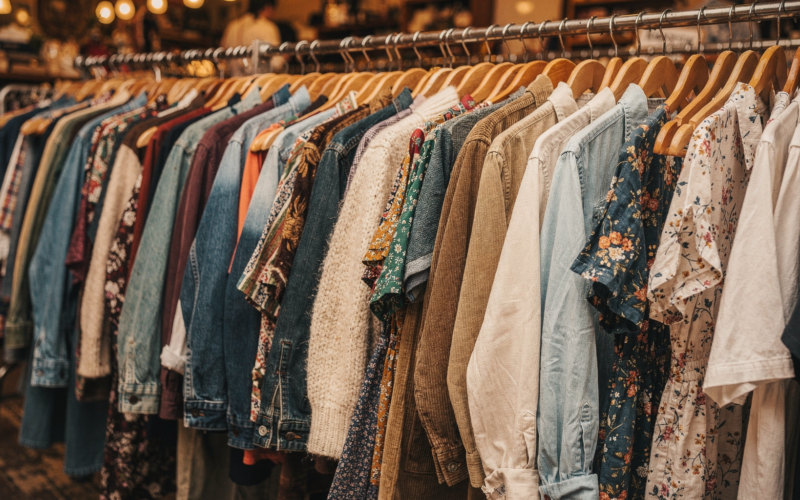
Somewhere in the last few years, buying used clothes stopped being a personality trait and became ordinary consumer behavior. The United States resale market is now worth roughly 61 billion dollars, up about 8.2 percent in a single year. Globally, resale reporting puts the secondhand apparel market on track to reach around 393 billion dollars by 2030, which would represent roughly a tenth of everything the world spends on clothing. That is not a niche. That is a parallel retail economy operating alongside the main one.
Most consumers are already participating
The statistic that reframes this fastest is participation. Around 59 percent of consumers report buying secondhand. Once a behavior crosses half the population it is no longer a trend to be explained, it is a baseline to be accounted for. Brands still writing resale into their strategy decks as an emerging consideration are describing something that already happened. The American secondhand apparel market grew about 14 percent in 2024 alone, and the growth rate across resale broadly has been running near 16 percent annually.
Price is the driver, not virtue
The environmental framing gets the marketing attention and the price is doing the actual work. When apparel costs rise and household budgets tighten, secondhand offers something no discount rack does, which is access to better construction at a lower number. A well-made coat from eight years ago frequently outperforms a new one at the same price, because the new one was designed to hit a price point rather than a quality standard. Shoppers noticed. Framing this as an ethical choice rather than a value choice misreads why it is growing.
Gen Z is the engine, and that matters
Projections attribute about 40 percent of secondhand apparel growth through 2030 to Gen Z, with millennials contributing around 31 percent. Generational adoption of a shopping habit is stickier than a fashion cycle, because it forms during the years when people establish how they buy things. A twenty-four year old who has never paid full retail for a winter coat is unlikely to start at thirty-four. That is what makes the projections credible rather than promotional.
The measurement problem nobody planned for
Here is the genuinely underappreciated consequence. Official inflation measurement is built around new goods bought through conventional retail. As a meaningful share of apparel spending migrates to resale platforms, consignment shops and peer-to-peer sales, the gap between what a price index captures and what households actually pay for clothing widens. Analysts have started asking directly how secondhand shopping affects the consumer price index. If people respond to expensive clothing by buying used, measured apparel inflation and experienced apparel inflation drift apart, and policy gets made on the measured one.
The supply side is the real constraint
Every resale business runs on a supply of secondhand goods it does not manufacture, and that is the structural vulnerability. Sourcing has gotten harder and more competitive as demand grew, which is why consignment operators talk about acquisition rather than sales. There is also a quality timing problem approaching. The clothing entering the used market now was largely made before the sharpest declines in garment construction. As lower quality fast fashion becomes the available secondhand inventory, the core value proposition, better goods for less money, gets harder to deliver.
Physical resale is having its own moment
This is not purely an online story. Consignment and thrift retail has been growing alongside the platforms, and physical stores offer the one thing resale apps genuinely cannot, which is the ability to assess condition and fit before buying. Given that the single biggest friction in online secondhand is uncertainty about what will actually arrive, the persistence of in-person resale makes sense. The two channels are solving different problems for the same shopper.
Brands stopped fighting resale and started running it
For years the conventional worry inside apparel companies was that a healthy used market cannibalises new sales. That argument has largely been abandoned, and recommerce, meaning brands operating their own resale channels, has become a standard playbook rather than an experiment. The logic is straightforward once you accept resale is happening regardless. A brand that runs its own resale channel captures a second margin on an item it already sold, keeps the customer inside its ecosystem, and gains a resale value story that makes the original purchase easier to justify. Broader market analyses now size the secondhand apparel opportunity above 485 billion dollars, which is a number large enough to end an internal debate.
How to actually buy well in this market
A few things separate people who do this successfully from people who accumulate. Shop by construction rather than brand, since a label tells you what something cost once and seams tell you how long it will last. Learn two or three specific categories deeply instead of browsing everything, because expertise is what turns luck into consistency. Check the return policy on platforms, as it varies enormously and is the main protection against a bad description. And buy for gaps you actually have, since the failure mode of cheap goods is volume rather than expense.
Frequently asked questions
How big is the secondhand market in 2026?
The United States secondhand market is valued at roughly 61 billion dollars, up about 8.2 percent from the previous year.
How many people buy secondhand?
Around 59 percent of consumers report purchasing secondhand goods, which makes it majority behavior rather than a niche habit.
How fast is resale growing?
Resale has been growing at roughly 16 percent annually, with the global secondhand apparel market projected near 393 billion dollars by 2030.
Who is driving the growth?
Gen Z is projected to account for about 40 percent of secondhand apparel growth through 2030, with millennials contributing roughly 31 percent.
Does secondhand shopping affect inflation data?
It raises a real measurement question, since price indexes are built around new retail goods while a growing share of spending happens outside that channel.
Will secondhand quality decline over time?
Possibly. As garments made under lower construction standards become the available used inventory, the quality advantage that drives resale becomes harder to sustain.
The same logic is reshaping how people furnish rooms, which is worth reading next to the color and material shift happening in interiors.