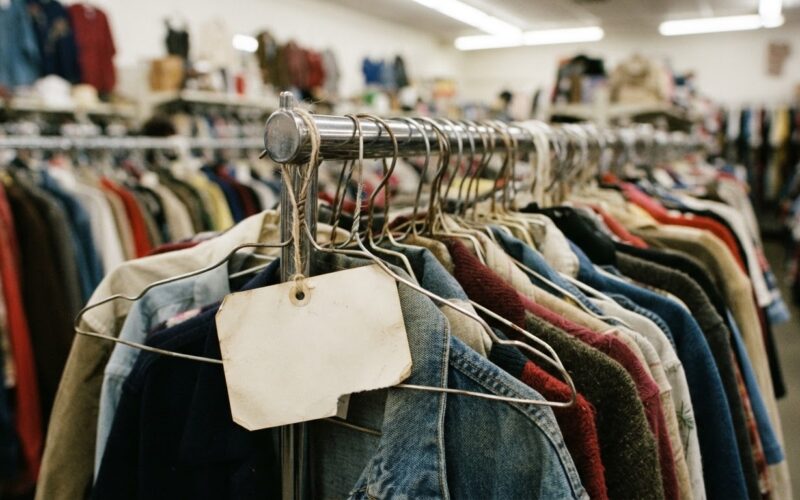
There is a particular feeling you get holding a nine dollar tag on a stained cotton shirt at a chain thrift store, and it is not the feeling thrifting used to produce. Secondhand shopping has spent six years transforming from a budget necessity into a lifestyle category, and lifestyle categories have pricing power. Goodwill reported a record seven billion dollars in revenue last year. That number is the whole story compressed into one line.
The industry framing is relentlessly positive, and to be fair, some of it is earned. Buying used keeps clothes out of landfills and undercuts the churn of disposable fashion. But there is a second thing happening underneath the sustainability narrative, and the people it affects have been saying so loudly. When the bargain aisle becomes an investment category, somebody gets priced out of the bargain aisle.
The Numbers Behind The Price Creep
The United States secondhand market is estimated around 61 billion dollars in 2026 and projected to reach nearly 79 billion by 2030. Globally, resale is forecast to hit 393 billion by 2030, growing at roughly twice the rate of new clothing. Thrift store revenue specifically is running about 13.7 billion this year, up two percent, and analysts credit tariff driven inflation on new apparel for pushing shoppers toward used goods. More demand chasing the same donated supply produces exactly one outcome.
Resellers Are Not The Villain, But They Are A Factor
It is fashionable to blame resellers, and I think that is mostly displaced anger. Someone combing racks for hours and listing items online is doing labor and taking inventory risk. What resellers actually did was reveal the true market value of donated goods, and once stores learned that a vintage jacket clears two hundred dollars online, they stopped pricing it at eight. The reseller found the price. The chain adopted it. Only one of those parties has scale.
Corporate Thrift Learned Retail Pricing
Large secondhand chains now use category based pricing, boutique sections, and separate premium racks with their own tags. Some have hired merchandising staff. That is not evil, it is competence, and it funds the job programs many of these organizations actually exist to run. But it does mean the store is no longer accidentally cheap. It is deliberately priced, and deliberate pricing always finds the ceiling that demand will bear.
Who Actually Loses Here
People who need clothes and have thirty dollars. That is the group that has been counting on thrift stores for decades, and they are the ones now reporting that the shelves have been picked over and the prices no longer make sense. This is the part that gets skipped in every enthusiastic piece about the resale boom. A market can grow enormously while becoming worse at the one function that made it socially valuable in the first place.
Furniture Is Following The Same Path
Nearly half of thrift shoppers now buy furniture secondhand, which was a niche behavior a decade ago. Anyone who has watched a marketplace listing for a mid century credenza go from forty dollars to four hundred understands the pattern. The same dynamic that repriced denim is repricing dressers, and for the same reason. Once a category gets a name, an aesthetic and an audience, it stops being overlooked, and being overlooked was the entire source of the discount.
The Donation Pipeline Is Quietly Getting Worse
Here is the supply side problem nobody markets. A large share of what gets donated now is ultra fast fashion, and ultra fast fashion does not survive two owners. Thin jersey, bonded seams, printed synthetics that pill after a season. Sorters pull an enormous volume of it straight to textile recycling or export because it cannot be resold at any price. So the pile arriving at the back door is growing while the portion of it that is actually worth putting on a rack shrinks. That squeeze is invisible to shoppers, who only see thinner racks and higher tags, and it is a big reason the good material now carries a premium.
It also means the quality you remember from thrifting a decade ago was partly an inheritance. Those racks were full of garments made when mid market clothing was constructed to last, and that inheritance is finite. We are working through the end of it.
How To Still Find Real Value
Go to the stores that have not been discovered, which usually means smaller, church affiliated or estate based operations rather than the chains with a social media presence. Shop weekday mornings after restocking. Learn fabric content by touch so you can identify wool and silk faster than a pricing clerk did. Buy things that need one small repair, since visible flaws still get discounted while the underlying garment quality does not change. Ignore the labeled vintage section entirely.
What I Think Comes Next
The correction will come from supply, not from restraint. Donated volume is finite and demand is not, so the most likely outcome is a two tier market: curated secondhand priced like retail, and genuinely cheap secondhand pushed further into informal channels like community swaps, buy nothing groups and estate sales. That is a worse outcome than what we had, and it will be described in press releases as growth. Both of those things will be true at once.
Frequently Asked Questions
Why did thrift store prices go up?
Demand grew far faster than the supply of donated goods, and chains learned what items actually fetch online. Tariff driven price increases on new clothing pushed even more shoppers into the secondhand market.
How big is the secondhand clothing market?
Around 61 billion dollars in the United States in 2026, with projections near 79 billion by 2030 domestically and 393 billion globally.
Are resellers to blame?
Only partly. Resellers revealed what donated items were worth, but the repricing decisions were made by the stores themselves, which operate at far greater scale.
Is thrifting still cheaper than buying new?
Often yes, especially for quality materials, but the gap has narrowed considerably at large chains. Smaller independent shops still tend to offer real discounts.
When is the best time to thrift?
Weekday mornings shortly after restocking, and immediately after major moving seasons or estate clearances in your area.
Does buying secondhand actually help the environment?
Extending a garment’s life reduces demand for new production, which is a genuine benefit. It does not offset unlimited consumption, so volume still matters. See also our piece on the shrinking sneaker trend cycle.