
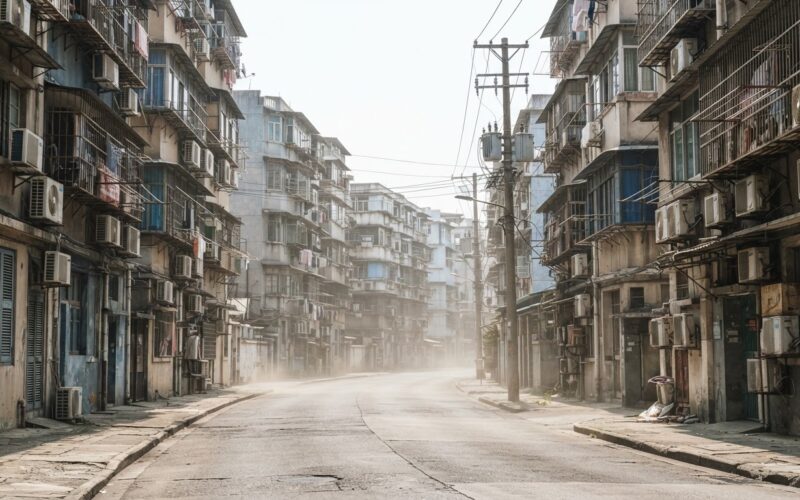
Japan’s weather agency added a new designation to its vocabulary this summer. Kokushobi, translated roughly as cruelly hot day, marks temperatures reaching 40 degrees Celsius. When a national meteorological service invents a word, it is not doing poetry. It is admitting that the existing categories no longer describe what is happening.
Across Northeast Asia the past week has delivered the kind of heat that stops being a weather story and becomes an infrastructure story. South Korea recorded its highest temperature in 122 years of record keeping. Japan is trying to run earthquake relief in triple digit heat. North Korean state media is telling people to stay inside. Three lions died at a zoo outside Tokyo. The through line is that heat exposes whatever was already fragile.
South Korea Broke A 122 Year Record
On Sunday the southeastern city of Yangsan reached 42.5 degrees Celsius, about 108 degrees Fahrenheit, the highest reading in 122 years of Korean record keeping. Extreme heat has been linked to 19 deaths in the country since mid May. President Lee Jae Myung described the situation as a national disaster at a Cabinet meeting on Tuesday and called for a fundamental overhaul of the national crisis system, framing extreme weather as the new normal rather than an anomaly.
Seoul Hit A Threshold It Had Never Hit Before
The heat began concentrated in the south, then pushed north toward the capital. On Tuesday the Korea Meteorological Administration issued its new severe heat wave warning for all of Seoul for the first time, after applying it to parts of the city a day earlier. That warning triggers when the maximum perceived temperature reaches at least 38 degrees Celsius. The Seoul metropolitan area holds more than 26 million people, who were advised to stay indoors, hydrate and check on vulnerable neighbors.
Japan Is Running Disaster Relief In Triple Digits
This is the compounding failure that deserves the most attention. A 7.1 magnitude earthquake struck Kumamoto prefecture on Kyushu on July 28, and temperatures have exceeded 100 degrees Fahrenheit since. More than 40,000 households remain without water according to public broadcaster NHK. Thousands of people are still in emergency shelters, and others are sleeping in their cars out of fear of further tremors. Many shelters lack air conditioning and clean water.
One Death Shows How The Two Disasters Multiply
Officials said a woman in her seventies was found dead last week of apparent heatstroke while sheltering in her car after the quake, bringing the total death toll to 38. Kumamoto Governor Takashi Kimura called it heartbreaking and urged displaced residents to keep air conditioning running in their vehicles or move to cooled evacuation centers. He asked Prime Minister Sanae Takaichi for greater support to improve shelter conditions, and she said the government was ensuring continuous water supply to evacuation centers and medical facilities.
The Lions At Tama Zoological Park
It is the detail that has traveled furthest, and it is a legitimate indicator rather than a curiosity. Officials at the park outside Tokyo said three female lions between the ages of three and 15 died within a week from suspected heat related causes. Ten of the zoo’s 16 lions had shown signs of distress since mid July, including reduced activity, appetite loss, and in some cases losing consciousness or the ability to stand. Preliminary findings showed dehydration and multiple organ failure in all three.
North Korea Is Affected Too, And We Know Less
Temperatures are soaring across North Korea as well, where the state newspaper Rodong Sinmun urged residents to avoid outdoor activity and told farmers to protect crops from the heat, according to Yonhap. State media instructions are essentially the only visibility outsiders get. In a country with limited air conditioning, a largely agricultural workforce and thin public health reporting, the absence of a casualty figure should not be read as an absence of harm.
Why Records Falling Everywhere At Once Matters
Individual heat records break constantly and mean little in isolation. The pattern worth noting is simultaneity. Northeast Asia is breaking records while a heat dome bakes the American West and historic wildfires burn across Spain and France. Climate scientists tracking the year have put the odds of 2026 surpassing 2024 as the hottest year on record at roughly 35 percent, and have been revising those odds upward nearly every month. That revision trend is the real signal.
What Actually Reduces The Death Toll
Heat kills quietly and mostly indoors, which is why the interventions that work are unglamorous. Cooling centers that are genuinely reachable without a car. Wellness checks on elderly residents living alone, which is how the low income Seoul neighborhoods getting attention this week are being handled. Air conditioning treated as medical equipment rather than a luxury appliance. And shelters built with cooling from the start, because the next disaster will arrive in the same heat this one did.
Frequently Asked Questions
What does kokushobi mean?
It is a designation adopted by the Japan Meteorological Agency for days reaching 40 degrees Celsius, translating roughly to cruelly hot day.
What was South Korea’s record temperature?
42.5 degrees Celsius, about 108 degrees Fahrenheit, recorded in Yangsan on Sunday. It is the highest in 122 years of record keeping.
How many people have died?
Extreme heat has been linked to 19 deaths in South Korea since mid May. In Japan, the Kumamoto earthquake toll stands at 38, including a woman who died of apparent heatstroke while sheltering in her car.
Why is the Japanese earthquake relevant?
A 7.1 magnitude quake struck Kumamoto on July 28. More than 40,000 households still lack water and many shelters have no air conditioning, so the heat is compounding the disaster.
What happened to the lions?
Three female lions at Tama Zoological Park outside Tokyo died within a week from suspected heat related causes, with preliminary findings of dehydration and multiple organ failure.
Is 2026 going to be the hottest year on record?
Analysts put the chance of surpassing 2024 at roughly 35 percent, with the estimate rising most months. For related coverage see our piece on the 2026 Pacific hurricane season.