
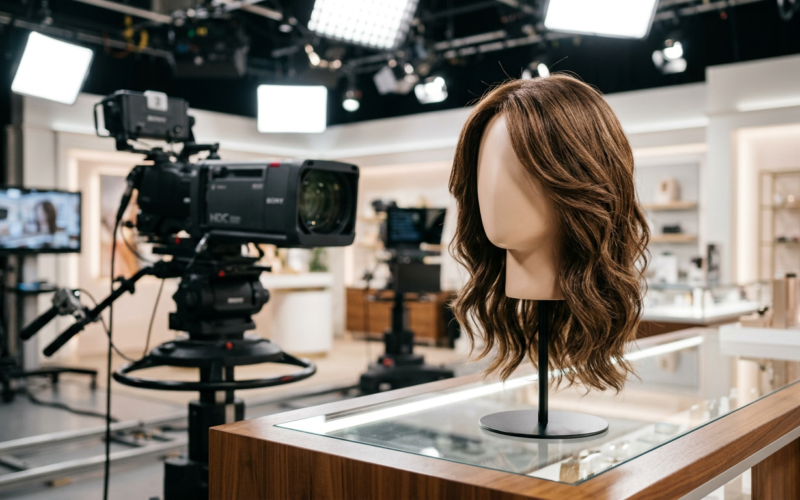
A wig demonstration on QVC went viral this week for the least beauty related reason imaginable. Host and wig designer Toni Brattin was praising the texture and wave pattern on one of her Salon Select pieces, reached for the word blowout, and did not get there. What went out live was “it looks like you went and got a b***job at your salon.” The studio came apart.
The clip has been everywhere since, and Brattin has said the network backed her. The more interesting story is why a live wig segment was happening at all, and why that format is still winning in 2026.
Live Selling Never Actually Died
The received wisdom for a decade was that television shopping was a legacy business waiting to be replaced. Then live commerce exploded on social platforms and everyone rediscovered a format QVC had been running since 1986.
What the newer platforms rebuilt from scratch was the thing that made this moment funny in the first place. A person, unedited, in real time, handling a product they have to demonstrate rather than describe.
Unscripted Is The Product
A polished ad cannot produce a blooper because there is nothing left unplanned. Live selling can, and the audience knows it, which is precisely why viewers stay through segments that would never hold attention as recorded video.
Brattin’s recovery is the part professionals noticed. She acknowledged it, let the room laugh, and kept selling. That instinct is a specific skill and it is the reason long tenured hosts are difficult to replace.
There is an economic reason the format persists as well. Live selling compresses discovery, demonstration and purchase into a single window, and conversion rates in that window are far higher than anything a static product page produces. Networks are not nostalgic. They are looking at the numbers.
Wigs Are Unusually Hard To Sell On Camera
Most beauty products photograph well and demonstrate poorly. Wigs are the reverse. Fibre texture, wave pattern, cap construction and the way a hairline reads under studio lighting are all things a still image actively hides.
That is why the category lives on live video. A host turning a piece under lights, showing the part and the density, communicates more in ten seconds than a product page manages in ten photographs.
The Category Has Changed Enormously
Wigs used to be sold primarily as a solution to hair loss, and that market remains important, particularly for people going through medical treatment. The framing was clinical and often quietly apologetic.
That has shifted. Wigs and toppers are now sold openly as styling tools, the same way extensions and heat tools are, and the language around them has moved from concealment toward convenience and creativity.
Price transparency helped that shift along. Once shoppers could compare pieces openly across retailers, the category lost the discretion that used to surround it, and discretion had been doing a lot of work to keep prices high and questions unasked.
What To Actually Look For
Cap construction matters more than fibre marketing. Lace front, monofilament top and wefted back each behave differently, and the difference between a natural parting and an obvious one usually comes down to the cap rather than the hair.
Density is the second thing people get wrong. Most stock wigs are made denser than real hair because it photographs better, and a great deal of what makes a wig look artificial is simply too much of it.
Synthetic Has Closed The Gap
Heat friendly synthetic fibre has improved substantially, and modern pieces hold a wave pattern without styling and cost a fraction of human hair. The tradeoff is heat tolerance and lifespan rather than appearance.
Human hair still wins for versatility and longevity if you actually restyle regularly. If you want one look repeatedly and want it to survive being packed in a bag, synthetic is frequently the better purchase.
Fit is the third variable and the one nobody mentions on air. Head circumference varies more than stock sizing acknowledges, and most adjustable straps only cover part of that range. A piece that is technically excellent will still look wrong if it sits half an inch too far forward.
Why The Clip Traveled So Far
Twenty five thousand posts and counting, and the reason is not the innuendo. It is the collapse of a highly controlled format, on a network built on composure, in front of a live audience with no edit available.
Every genuinely viral live selling moment has this shape. The product barely matters. What spreads is the sudden evidence that a person is actually there, which is the one thing pre recorded commerce content can never fake.
What Retailers Should Take From It
The lesson is not to court accidents. It is that audiences reward visible humanity, and that the tightest scripted live stream underperforms a slightly loose one because the looseness is the signal that it is real.
That trust dynamic is driving where beauty spending goes right now, which we broke down in our look at where beauty sales are actually growing in 2026.
Frequently Asked Questions
What happened during the QVC wig demo?
Host and wig designer Toni Brattin misspoke while describing a salon style blowout finish during a live segment. She meant to say the wig looked like a fresh blowout, and the word that came out instead was b***job. The studio reacted, the clip spread widely, and Brattin has said the network supported her.
Who is Toni Brattin?
She is a wig designer and long running QVC presenter who sells her own hair pieces on the network, including the salon style range featured in the viral segment.
Is live shopping still growing?
Yes. Live commerce has expanded substantially on social platforms, effectively rebuilding a format television shopping networks have run since the 1980s.
Why are wigs sold on live video rather than photos?
Texture, wave pattern, cap construction and hairline all read poorly in still images. Live demonstration shows movement and density in a way photography cannot.
Is synthetic hair worse than human hair?
Not automatically. Heat friendly synthetic holds style without work and costs far less. Human hair offers more restyling versatility and a longer lifespan.
What makes a wig look natural?
Cap construction and appropriate density. Many stock wigs are denser than real hair because it films better, and reducing that is often the single biggest improvement.