#FursuitFriday is trending in the United States again, as it does most weeks, and the usual pattern follows. People outside the community see costumes. People inside it see thousands of dollars of commissioned craft work and a waitlist that runs eighteen months deep.
Strip away the culture war noise around furry fandom and what remains is one of the most sophisticated independent costume industries operating anywhere, built almost entirely on small makers, direct commissions and reputation.
These Are Not Off The Shelf Costumes
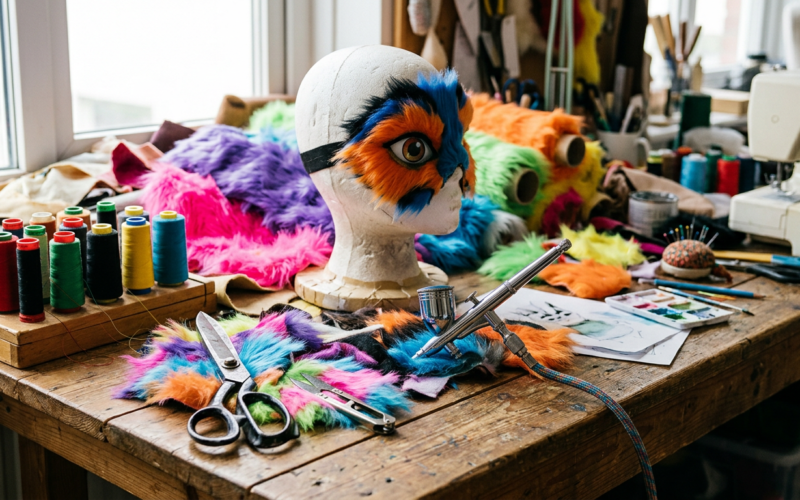
A full fursuit is a bespoke build. The maker works from a character reference sheet, takes a duct tape body double for fit, sculpts a head from foam or resin, and hand grooms fur that arrives as flat fabric with no shading at all.
The result is closer to theatrical puppetry than to a Halloween purchase. Moving jaws, tracking eyes, articulated digitigrade legs and airbrushed fur shading are standard expectations at the upper end of the market.
The Prices Tell You What The Labor Is Worth
Full suits commonly run into the thousands of dollars, and premium makers charge considerably more. Partial suits, meaning head, hands, feet and tail, sit lower but still represent a serious purchase.
That pricing reflects hundreds of hours of skilled handwork. When people react to the numbers with disbelief, they are usually comparing against mass manufacturing rather than against custom tailoring, which is the fairer comparison.
There is also a hidden cost most outside observers miss entirely. Character design itself is usually a separate commission from a digital artist, and a detailed reference sheet is its own line item before a single piece of foam gets cut.
Waitlists Are The Real Constraint
Established makers open commission slots rarely and fill them within minutes. Some run lotteries because first come ordering became unmanageable. A year or more between payment and delivery is normal rather than exceptional.
This scarcity has produced a secondary market in premade suits and a persistent problem with scam sellers, which the community polices through shared maker reviews and warning lists that function as informal credit ratings.
The Skills Transfer Directly To Other Industries
Foam sculpting, fur grooming, airbrushing, animatronic jaw mechanisms and lightweight harness engineering are the same competencies theme parks, film creature shops and mascot manufacturers hire for.
Plenty of makers have moved between fandom commissions and professional creature effects work. The fandom functions as an unusually effective informal apprenticeship system for a trade with very few formal training routes.
Repair work is another underrated part of the trade. Fur mats, foam compresses, and seams give out under convention use, and a good portion of a working maker’s calendar goes to refurbishing suits built years earlier by someone else.
Why The Photos All Look The Same
Fursuit photography has developed strong conventions. Low angles, outdoor light, motion blur on the tail, and a shallow depth of field that hides the seam where the head meets the body suit.
These are not accidents. They are the accumulated solutions to a hard photographic problem, which is making a static foam face read as expressive. The best fursuit photographers are genuinely skilled and rarely credited outside the community.
The Heat Management Problem Is Serious
A full suit is an insulated layer worn over a compression base. Overheating is the primary safety concern at conventions, and organizers run cooling rooms, hydration stations and handler systems for exactly this reason.
Experienced wearers plan around it with cooling vests, scheduled breaks and a spotter. It is a practical constraint that shapes how long anyone can actually be in costume, and newcomers consistently underestimate it.
Handlers deserve more credit than they get. Vision through a costume head is badly restricted, so a friend walking alongside to steer, watch for stairs and read the room is a functional safety requirement rather than an accessory.
The Fandom Is Older Than Most Assume
Organized furry fandom traces to science fiction convention art rooms in the 1980s, well before the internet made it visible. Fursuiting emerged from that scene gradually rather than arriving as an online phenomenon.
That history matters because coverage tends to treat it as a recent internet oddity. It is a forty year old subculture with its own conventions, charity auctions and economy, and the weekly hashtag is one of its oldest rituals.
Charity is woven through the whole thing in a way outsiders rarely hear about. Convention auctions routinely sell donated suits and artwork for animal welfare and youth causes, and the sums involved are large enough that the fandom is a meaningful funding source for the organisations receiving them.
What Costume Makers Elsewhere Can Learn
The transferable lesson is about commissioning practice. Clear reference sheets, staged payments, published turnaround expectations and public maker reviews solve problems that plague custom work in almost every other craft.
Cosplay culture has absorbed a lot of this already, and the crossover shows up on the street. We looked at that spillover in our piece on how cosplay is reshaping everyday streetwear.
Frequently Asked Questions
What is #FursuitFriday?
It is a long running weekly hashtag where members of the furry fandom post photos of their costumes. It regularly reaches trending lists in the United States on Fridays.
How much does a fursuit cost?
Full custom suits commonly run into the thousands of dollars, with premium makers charging significantly more. Partial suits covering head, hands, feet and tail cost less but remain a major purchase.
Why do fursuits take so long to make?
Each one is built to measurements for a specific character and person. Sculpting, fur grooming and mechanical elements are handwork, and established makers carry waitlists that can exceed a year.
Is fursuiting the same as cosplay?
They overlap but differ. Cosplay usually recreates an existing character, while a fursuit typically represents an original character designed by the wearer or an artist they commissioned.
Why do conventions have cooling rooms?
Full suits are heavily insulated and overheating is the main safety risk. Organizers provide cooling spaces, hydration and handler systems to manage it.
How old is furry fandom?
Organized furry fandom dates to science fiction convention art communities in the 1980s, making it roughly four decades old and considerably older than its online visibility suggests.