
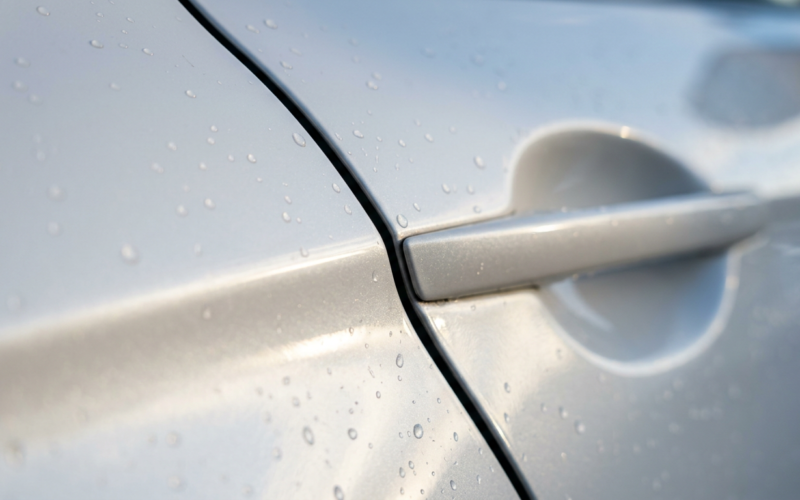
China has ordered the largest vehicle recall in its history, covering nearly 4.3 million cars across 11 automakers. Tesla accounts for 2.98 million of them. The defect is door handles, specifically the emergency mechanical releases that let people out after a crash or an electrical failure.
The regulator has also announced that concealed door handles will be banned outright from 2027, making China the first country to prohibit them.
What the Defect Actually Is
Modern cars increasingly use electronic door releases, with a mechanical backup hidden somewhere in the door for when power fails. That backup is the problem.
Regulators found the emergency releases hard to find and hard to operate. In a crash, with the car dark and possibly upside down, an occupant or a rescuer needs to open a door in seconds without reading a manual. A release tucked under a floor mat flap or behind a speaker cover does not meet that standard.
Why Flush Handles Exist at All
Two reasons, and only one of them is engineering. Handles that sit flush with the body reduce aerodynamic drag slightly, which helps electric vehicle range at highway speed.
The larger reason is aesthetic. A smooth unbroken flank looks futuristic, and once one manufacturer did it the rest followed because a car with conventional handles started looking dated. That is a styling decision that ended up with safety consequences.
The Scale of Tesla’s Share
Just under three million vehicles is the bulk of the recall and roughly the entire relevant Tesla fleet in China. Xiaomi covers 390,000, Leapmotor 371,000 and Xpeng 264,000.
Tesla’s share reflects being early and being large rather than being uniquely careless. It pioneered flush handles at volume, so it has the most cars on the road with them. Tesla’s recall work begins September 25.
What a Software Recall Means
Much of this is expected to be handled through software rather than hardware, which is now routine and genuinely changes what a recall costs.
Software can change how a door unlocks in a crash, whether a system stays powered longer, or how the car behaves when it detects an impact. What software cannot do is move a physical handle to a place a panicked person can find in the dark, which is why the 2027 ban exists alongside the recall.
The 2027 Ban Is the Bigger Story
Recalls fix cars already sold. A design prohibition changes every car built afterward, and China is a large enough market that manufacturers do not design a separate car for it.
That means a rule written in Beijing likely reshapes door handles globally, because engineering a compliant version and a non compliant version of the same vehicle is not worth the cost. Regulatory decisions in one large market routinely export themselves this way. Vehicle automation rules have been moving fast elsewhere too, as our coverage of Nevada’s robotaxi approval showed.
What Owners Should Do Now
This recall applies to vehicles in China, not to cars in the United States. That said, the underlying design exists on the same models sold everywhere.
The genuinely useful action takes five minutes: find the manual emergency release on your own car and on every door, and show everyone who rides in it. Most owners of vehicles with electronic releases have never located theirs, and the time to learn is not during an emergency.
Why This Is a Software Era Problem
There is a broader lesson here about what happens when physical functions get replaced by electronic ones. A mechanical door handle works when the car is dead, upside down and underwater, because it is a lever connected to a latch.
An electronic release depends on power, on a control module, and on software behaving correctly under conditions nobody could fully test. Every one of those is a new failure point introduced in exchange for aerodynamics and a smooth flank.
The same tradeoff is playing out across the whole vehicle: touchscreen climate controls, drive by wire steering, electronic parking brakes. Most of the time the electronic version is better. The exception is the small set of functions you need specifically when everything else has already failed.
Whether US Regulators Follow
No American action has been announced. The National Highway Traffic Safety Administration operates on its own timeline and does not automatically mirror foreign regulators.
It does pay attention. A defect finding of this scale in a major market becomes part of the record, and it makes any future domestic petition considerably harder to dismiss.
Frequently Asked Questions
How many vehicles are being recalled?
Nearly 4.3 million across 11 automakers in China, announced August 21, 2026. It is the largest vehicle recall in the country’s history.
Which automakers are affected?
Tesla with 2.98 million vehicles, Xiaomi with 390,000, Leapmotor with 371,000 and Xpeng with 264,000, among others. Tesla’s recall work begins September 25.
What is the defect?
Emergency mechanical door releases that are difficult to locate or operate after a crash or electrical failure, potentially trapping occupants inside.
Does this affect cars in the United States?
The recall covers vehicles in China. The same design exists on models sold elsewhere, but no US recall has been announced.
What is the 2027 ban?
China will prohibit concealed door handles on new vehicles from 2027, the first country to do so. It is likely to influence design globally.
What should I do as an owner?
Locate the manual emergency release on every door of your own vehicle and show anyone who rides with you. Most owners have never found theirs.