
Every house has a list. The gutter that overflows in a hard rain, the deck board that flexes, the slow drain, the section of siding nobody looks at. The list is not a moral failing. It is what happens when a building meets a budget.
What has changed is the price of leaving things on it. Thumbtack put the average annual cost of home care at $11,175 in its 2026 State of American Homes Report, and found that the most expensive repairs almost never start expensive. They start as something small that got postponed.
Deferred Maintenance Is A Loan You Did Not Sign For
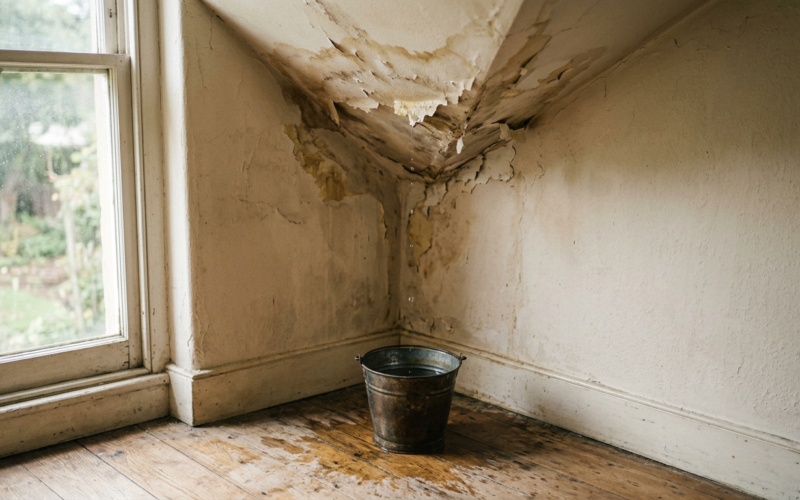
A repair that waits does not stay the same size. Water finds framing. A small roof issue becomes a sheathing issue and then a ceiling issue. The original job had a price. The eventual job has a price plus everything the original job was quietly protecting.
That is the part that makes postponement feel rational in the moment and expensive in retrospect. You are not choosing between fixing it now and fixing it later. You are choosing between fixing it and fixing it plus whatever it damages first.
The Most Expensive Repairs Are The Ones You Cannot See
In Thumbtack’s ranking, foundations top the list at an average of $6,174, followed by decks and porches at $3,899, solar panels at $2,946 and stairs at $2,402. Notice the pattern. The priciest item is the one homeowners are least likely to inspect and least likely to notice degrading.
Cosmetic problems get attention because they are visible. Structural problems get attention because they became emergencies. Almost nothing gets attention while it is still cheap.
Most People Do Not Call A Professional First
The same report found that when something goes wrong, most homeowners research online, ask around, or try the fix themselves before contacting a pro. That is understandable and often correct. A running toilet does not need a plumber.
The trouble is that the DIY window and the diagnostic window overlap. Three weeks of trying things is three weeks the underlying issue kept doing whatever it was doing, and the eventual professional visit starts from a worse baseline.
Repair Costs Have Outrun The Inflation You Notice
Home repair and remodeling costs rose roughly four percent over the past year, which sounds mild until you look at the decade. Over ten years the same category is up about sixty one percent. Compounding does not feel like anything until you need a roof.
That trajectory changes the arithmetic on waiting. In a low inflation environment, postponing a $2,000 job costs you the risk. In this one, it costs you the risk plus a materially higher quote.
Budget In Percentages, Not Guesses
The common rules of thumb are one percent of home value per year for maintenance, or a range of one to three percent for a home’s first years after purchase. They are crude, but a crude number you actually set aside beats a precise number you never calculate.
The point is not the exact figure. It is that the money should exist before the failure does, because a repair paid from a fund is a repair. A repair paid on a credit card is a repair plus interest.
Build A Boring Inspection Habit
Twice a year, walk the perimeter and look at grade, gutters, downspouts and where water leaves the property. Go into the crawlspace or basement with a flashlight. Check where the deck attaches to the house. Look at the ceiling under every bathroom.
It takes an hour and catches most of what turns into a five figure invoice. Utilities deserve the same routine attention, and we covered why that side of the ledger keeps climbing in our piece on the electric bill increases hitting households this year.
There is also a resale dimension. Inspectors find deferred maintenance reliably, and buyers price it at worst case rather than actual cost. A thousand dollar repair you skipped can become a five thousand dollar credit at closing, negotiated by someone with every incentive to assume the problem is bigger than it is.
Keep Records Like The House Is An Asset
Because it is one. Keep receipts, warranties, contractor contacts, appliance model numbers and dates of major work in one place. When you sell, that folder is evidence. When something fails, it is a shortcut to the right fix.
It also stops the most common homeowner mistake, which is paying twice for the same diagnostic because nobody remembered what the last person said.
What To Do This Weekend
Pick the item on your list that involves water and do that one. Water is the mechanism behind most expensive failures, and it is the one that spreads. Everything else on the list can wait a little longer than the leak can.
Then write down what the rest of the list would cost if you did it properly. That number is the real annual price of your house, and knowing it is better than being surprised by it.
Frequently Asked Questions
How much should I budget for home maintenance each year?
Common guidance is around one percent of the home’s value annually, with higher ranges suggested in the first years of ownership. Thumbtack’s 2026 report put average annual home care spending at $11,175.
What are the most expensive common home repairs?
Thumbtack’s 2026 figures list foundations at an average of $6,174, decks and porches at $3,899, solar panels at $2,946 and stairs at $2,402.
Is it cheaper to fix things immediately?
Usually, because the cost of a delayed repair includes the secondary damage it caused. That is especially true for anything involving water intrusion.
Should I try the repair myself first?
For small, contained, reversible problems, yes. For anything structural, electrical, or involving active water, the DIY attempt often just delays diagnosis.
How fast are repair costs rising?
Roughly four percent over the past year, and about sixty one percent over the past decade according to the same report.
What records should I keep?
Receipts, warranties, contractor details, appliance model and serial numbers, inspection reports, and dates of any major work. Keep them together and digitally if possible.