
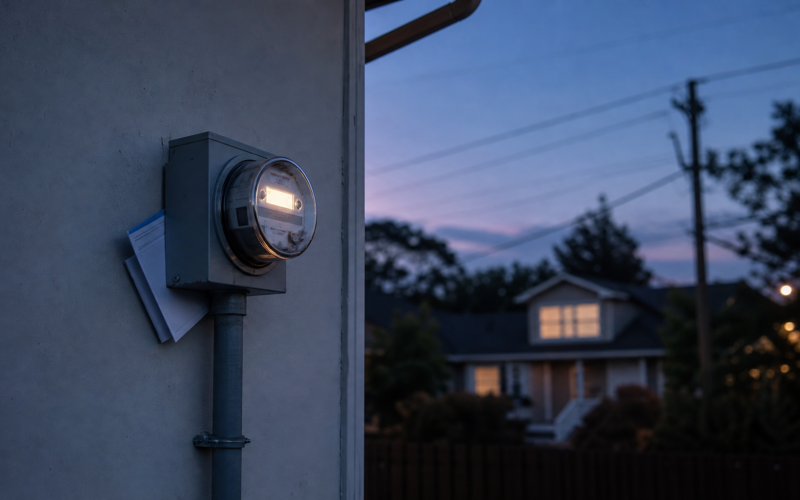
Utilities across the country asked regulators for a record 9.2 billion dollars in rate increases during the second quarter alone, bringing requests through the first half of the year to roughly 18.6 billion. Those filings would touch more than 56 million customers. If your July bill looked like a mistake, it probably was not.
What makes this cycle different from previous ones is where the demand is coming from. For twenty years household electricity use was basically flat. It is not flat anymore, and most of the new load has nothing to do with anything happening inside your house.
The Size of the Ask
A record 9.2 billion dollars in a single quarter is the number worth sitting with. Rate cases are not automatic, and regulators frequently approve less than utilities request, so this is a ceiling rather than a certainty. But filings of this scale set the direction of travel. Utilities file when they expect to spend, and they are expecting to spend on transmission, on generation and on hardening equipment against weather. Those costs land in the delivery portion of a bill, which is the part almost nobody reads.
Where the New Demand Comes From
Data centers have moved from a footnote to a load center. Federal energy estimates put their share of total United States electricity at 4.4 percent in 2023 and project somewhere between 6.7 and 12 percent by 2028. A single large facility can draw as much power as a hundred thousand homes. That demand arrives faster than transmission can be built, and when supply is tight, the price of every kilowatt hour on the grid rises, not just the ones a data center uses.
Who Pays for the Buildout Is the Real Fight
This is where reasonable people genuinely disagree, and it is worth representing fairly. One argument is that large new customers should pay the full cost of the infrastructure they require, through special tariffs and long term contracts. The counterargument is that big load customers also spread fixed costs across more usage, which can lower the per unit price for everyone if the contracts are structured well. Both can be true depending entirely on how a specific deal is written, which is why the terms matter more than the slogans.
Weather Is Doing Its Part Too
Cooling demand keeps setting records, and cooling demand is the least flexible thing on the grid. Nobody negotiates with a heat wave. Utilities also carry rising costs from storm restoration and from wildfire liability in several regions, and those costs flow into rate cases as surely as fuel does. A hotter summer therefore hits a household twice, once through more hours of air conditioning and again through a higher rate the following year.
The Bill Is Two Different Products
Almost every bill splits into supply, meaning the electricity itself, and delivery, meaning the poles, wires, meters and people who move it. Supply is the part that competitive shopping can sometimes affect. Delivery is regulated and rises with infrastructure spending. Most of the current increases are on the delivery side, which is exactly why switching suppliers often produces less relief than people expect. Knowing which half of your bill is growing tells you whether shopping will help you at all.
It also helps to understand why bills arrive as a shock rather than a slope. Rate changes are usually approved months after the hearings that decided them, then applied at the start of a billing cycle that happens to coincide with the hottest stretch of the year. The increase and the heat wave land in the same envelope, and the household attributes the entire jump to the air conditioning. Separating the two requires comparing the rate per kilowatt hour on this bill against the same month last year, which takes about ninety seconds and explains most of the mystery.
What Actually Lowers a Household Bill
The unglamorous items still dominate. Raising a thermostat a couple of degrees and running ceiling fans changes cooling load more than any gadget. Sealing the attic hatch and the gaps around ducts is the cheapest efficiency work in most homes. Time of use plans genuinely pay off for anyone who can shift laundry and dishwashing to late evening. Water heaters set higher than necessary quietly burn money all year. None of this is exciting, and all of it beats a smart plug.
Check Whether You Qualify for Help
Assistance programs are dramatically underused. Federal energy assistance, state level arrearage forgiveness, budget billing that smooths seasonal spikes, and utility funded weatherization all exist and all go unclaimed by households that qualify. Budget billing in particular is worth a phone call, because it does not lower the annual total but it removes the two months a year that wreck a budget. Utilities will not volunteer these. You have to ask.
What Comes Next
Expect more filings, more contested hearings and more state level attention to how large customers are charged. Expect the delivery portion of your bill to keep growing even in years when fuel is cheap. And expect the phrase load growth to appear in a lot of local news coverage, because for the first time in a generation, demand is genuinely rising and the grid was not built for it.
Small structural fixes at home compound, which is the same logic behind improving indoor air on a budget, where sealing and airflow do most of the work.
Frequently Asked Questions
How much are utilities asking to raise rates?
Electric and gas utilities requested a record 9.2 billion dollars in the second quarter of 2026 and about 18.6 billion through the first half, affecting more than 56 million customers.
Do data centers really affect residential bills?
They increase total demand on shared infrastructure, which can raise prices for everyone. How much depends heavily on how their contracts and tariffs are structured.
Why does my delivery charge keep growing?
Delivery covers regulated infrastructure. Spending on transmission, grid hardening and storm restoration flows into that portion of the bill.
Does switching electricity suppliers help?
Sometimes, but only on the supply portion. If most of your increase is in delivery charges, switching produces limited savings.
What is budget billing?
It averages your annual cost into equal monthly payments. It does not reduce the total but it removes the seasonal spikes that break household budgets.
Are rate increase requests always approved?
No. Regulators frequently approve less than utilities request, and hearings are public, which means customers can comment on filings in most states.