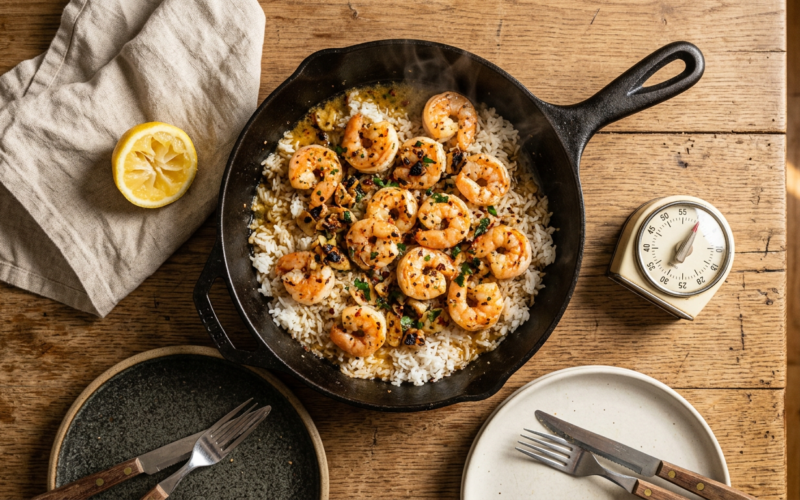
There is a specific kind of exhaustion that arrives around six in the evening, when the day has drained you and the question of what to make for dinner feels less like a pleasure and more like a burden. It is exactly the moment when takeout menus start to look reasonable and the drive-through seems almost merciful. The good news is that a genuinely satisfying dinner does not require an hour of effort or any particular culinary talent. With the right approach, you can have real food on the table in about thirty minutes, most of it hands-off.
The secret to fast weeknight cooking is not a collection of complicated recipes but a handful of flexible frameworks and a little strategy. Once you understand how quick dinners actually come together, you stop needing to follow rigid instructions and start improvising with whatever you have on hand. This guide covers the thinking behind thirty-minute meals and the reliable formats that make them possible night after night.
The strategy that makes fast dinners possible
Speed in the kitchen comes far more from method than from any single recipe. The cooks who consistently get dinner done quickly rely on a few principles that quietly do the heavy lifting. They keep a well-stocked pantry of staples so they are never starting from nothing, they lean on fast-cooking proteins and pre-cut or frozen vegetables to skip the slow steps, and they favor one-pan and one-pot meals that minimize both cooking time and cleanup. Above all, they do a little light preparation, gathering and chopping everything before the heat goes on, so the actual cooking flows without pauses. Internalizing these habits is what turns thirty-minute dinners from an aspiration into a routine.
Fast proteins are the foundation
The protein usually dictates how long a meal takes, so choosing quick-cooking options is the single biggest time saver. Thin cuts like chicken breast cutlets, shrimp, ground meat, eggs, and fish fillets all cook in minutes rather than the long braise a tougher cut demands. Canned beans and pre-cooked or rotisserie chicken are even faster, requiring only to be warmed through. Building your weeknight repertoire around these fast proteins, and keeping a few in the freezer, means the centerpiece of dinner is never the bottleneck. A protein that cooks in eight minutes leaves you plenty of room to pull the rest of the meal together in the same window.
Reliable frameworks you can improvise around
Rather than memorizing dozens of recipes, it helps to master a few adaptable formats that accept almost any ingredients. A stir-fry is nothing more than a fast protein and quick-cooking vegetables tossed in a hot pan with a simple sauce, served over rice or noodles. A skillet pasta cooks in a single pan while you prepare a quick sauce from pantry staples. A sheet-pan dinner roasts a protein and vegetables together with almost no active effort. Tacos and grain bowls come together in minutes from cooked components and fresh toppings. Once these frameworks are second nature, you can look at what is in your fridge and know immediately what to make.
Smart shortcuts that shave real time
Small efficiencies add up to the difference between a thirty-minute meal and an hour-long ordeal. Using pre-chopped vegetables, jarred sauces, and frozen ingredients is not cheating, it is smart cooking that keeps you out of the drive-through. Getting your longest-cooking element started first, such as putting water on to boil or the oven preheating before anything else, means the rest of the meal comes together in parallel rather than in sequence. Keeping your knives sharp and your workspace clear genuinely speeds up prep. And embracing balanced, simple plates, as encouraged by resources like the USDA at MyPlate.gov, means a quick meal can still be a nourishing one.
Keep a few defaults ready
The people who never resort to takeout on a hard night are usually the ones who have three or four go-to dinners they can make on autopilot. Choosing a handful of quick meals you genuinely enjoy and keeping their ingredients on hand removes the daily decision that so often ends in ordering out. When you already know that Tuesday can be a stir-fry and Thursday can be tacos, and the components are waiting in the fridge and freezer, dinner stops being a nightly crisis. That small bit of routine is what makes fast, home-cooked meals sustainable over the long run.
Frequently asked questions
What can I make for dinner in 30 minutes?
Plenty of satisfying meals fit in half an hour, especially those built on fast proteins and simple frameworks. Stir-fries, skillet pastas, sheet-pan dinners, tacos, and grain bowls all come together quickly using quick-cooking ingredients. The key is choosing a format that fits what you have on hand and starting your longest-cooking element first, so everything finishes around the same time.
How do I make weeknight cooking faster?
Focus on method rather than specific recipes. Keep a stocked pantry, rely on fast-cooking proteins and pre-cut or frozen vegetables, favor one-pan meals to cut cleanup, and do a little prep before the heat goes on. Getting your slowest element started first so the rest cooks in parallel, and keeping a few reliable default meals ready, dramatically speeds up weeknight dinners.
Are shortcuts like pre-chopped vegetables worth it?
For busy weeknights, absolutely. Pre-chopped vegetables, jarred sauces, and frozen ingredients save meaningful time and are far better than skipping a home-cooked meal for takeout. They let you get a balanced dinner on the table quickly with less effort. Using these conveniences is not cutting corners on quality, it is a practical strategy that makes cooking at home realistic on hectic days.
How do I get dinner on the table without a recipe?
Learn a few flexible frameworks like stir-fries, skillet pastas, and grain bowls that accept almost any ingredients. Once you understand the basic structure of each, you can look at what is in your fridge and improvise a meal without following step-by-step instructions. This skill, rather than a big recipe collection, is what makes fast, adaptable weeknight cooking possible.
Dinner in half an hour, any night
A good weeknight dinner is well within reach even on your most drained evenings, as long as you cook with a little strategy rather than by rote. Build around fast proteins, master a few adaptable frameworks, use smart shortcuts without guilt, and keep some defaults ready, and thirty-minute meals become your normal. To make it even easier, see our guides to meal prep for beginners and air fryer recipes for beginners, plus budget family dinners. Find more in the Food and Recipes section.