The most talked about longevity test of the summer requires no lab, no wearable and no subscription. It is a handshake. Grip strength has become one of the most studied numbers in aging research, and the reason is uncomfortable: how hard you can squeeze predicts how long you are likely to live better than most things your doctor measures.
The Study Everyone Is Quoting
The anchor is a 2015 analysis published in The Lancet that followed 139,691 adults across 17 countries. It found that every 5 kilogram drop in grip strength was associated with roughly a 16 percent higher risk of death from any cause.
That is a large effect for a measurement that takes four seconds. In the same data, grip strength was a stronger predictor of cardiovascular death than systolic blood pressure, which is the sort of finding that makes clinicians uncomfortable in a productive way.
Why a Handshake Predicts Anything
Grip strength is not magic and squeezing a device does not extend your life. What grip measures is a proxy for total body strength, muscle mass, nervous system function and the accumulated wear of everything you have done or failed to do.
Weak grip usually travels with weak legs, low muscle mass and a sedentary decade. The handshake is not the cause. It is the cheapest available readout of a much bigger system, which is exactly why researchers keep reaching for it.
The Correlation Trap Nobody Mentions
Here is where the internet gets careless. Buying a hand gripper and training your forearms will improve your grip number without improving the thing your grip number was reporting on.
It is the health equivalent of studying the answer key. If you want the outcome the research describes, you have to build the underlying strength that grip was standing in for, and that happens in your hips, back and shoulders far more than your fingers.
What Counts as a Weak Grip
General clinical thresholds sit around 26 to 30 kilograms for adult men and 16 to 20 kilograms for adult women, below which researchers start using the word weakness. Those bands vary by age, body size and the device used, so treat them as a rough map rather than a diagnosis.
The more useful measurement is your own trend. A single reading tells you very little. The same reading taken twice a year for five years tells you almost everything.
How to Actually Test It
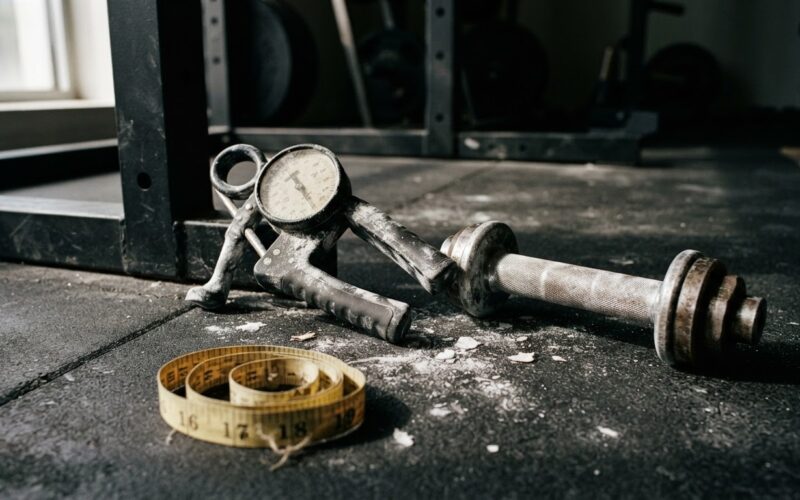
A hand dynamometer costs about as much as a month of protein powder. Sit upright, elbow at ninety degrees, squeeze hard for three seconds, take the best of three attempts on each hand, and write the number down with the date.
If you do not want to buy anything, use a dead hang from a bar and time it. It is a cruder test and it is confounded by body weight, but it is honest and it is free.
The Training That Moves the Real Number
Two or three strength sessions a week built on loaded carries, rows, pull ups or pull downs, deadlift variations and squats. Farmer’s carries deserve a special mention because they train grip, trunk and legs in the same set without any dedicated grip work.
Stop using straps for every heavy pull. Straps let your back outrun your hands, which is fine for a competitive lifter and counterproductive for someone trying to keep their hands strong into their eighties.
Where This Fits Against Everything Else
Grip is having its moment, but it is one line in a longer story. VO2 max, muscle mass and how fast you can rise from a chair are all pointing at the same underlying variable, which is whether your body is still capable of doing hard things.
It also sits alongside the least glamorous inputs of all. Strength training already displaced weight loss as America’s top stated fitness goal, a shift we covered when weight loss lost its spot as the country’s default gym objective, and sleep quietly governs how much of that training you absorb.
My Honest Take on the Trend
I like this one, with a caveat. Grip strength is a genuinely useful marker precisely because it is boring, cheap and hard to fake in a lab. It democratizes a kind of testing that usually requires a clinic.
The caveat is that the wellness industry has already noticed, and there is now a market for gadgets, apps and scored assessments built around a number you can measure with a $30 device. Buy the device. Skip the ecosystem. Then go pick up something heavy and walk with it.
Frequently Asked Questions
Does grip strength really predict how long you will live?
It predicts mortality risk in large population studies. A 2015 Lancet analysis of 139,691 adults linked each 5 kilogram drop in grip strength to about a 16 percent higher risk of death from any cause. That is an association, not a guarantee about any individual.
Will squeezing a hand gripper make me live longer?
Almost certainly not on its own. Grip is a proxy for whole body strength. Training only your hands improves the measurement without improving the thing it measures.
What is a good grip strength number?
Clinical weakness thresholds commonly sit near 26 to 30 kilograms for men and 16 to 20 kilograms for women, adjusted for age and body size. Your own trend over years is more informative than any single reading.
How do I test grip strength at home?
Use a hand dynamometer, seated with your elbow bent at ninety degrees, best of three squeezes per hand. A timed dead hang from a bar works as a free substitute.
Which exercises build the strength this is measuring?
Loaded carries, rows, pull ups, deadlift variations and squats, done two or three times a week. Reduce your reliance on lifting straps so your hands keep pace with your back.
Is grip strength better than VO2 max as a health marker?
They measure different systems and both predict longevity well. Grip is cheaper and easier to test. VO2 max reflects cardiorespiratory fitness. Tracking both gives a fuller picture than arguing about which one wins.