Pickleball won America and the industry immediately started looking for the next thing. It thinks it has found it. Padel courts in the United States have crossed roughly 1,000, a jump of about 400 percent since 2023, and USA Padel reported individual memberships up 53.5 percent and club memberships up 51.5 percent last year. The Wall Street Journal is now writing about the push to make padel the next pickleball, which is usually the moment a sport either breaks out or gets overbuilt.
Pickleball Is Still Enormous
Perspective first. The 2026 SFIA participation report counted roughly 24.3 million Americans playing pickleball in 2025, up 22.8 percent from the year before. Padel’s total participation is a rounding error against that.
So the honest framing is not padel overtaking pickleball. It is padel growing quickly from a very small base while pickleball keeps growing from an enormous one. Both things can be true and only one of them makes a good headline.
What Padel Actually Is
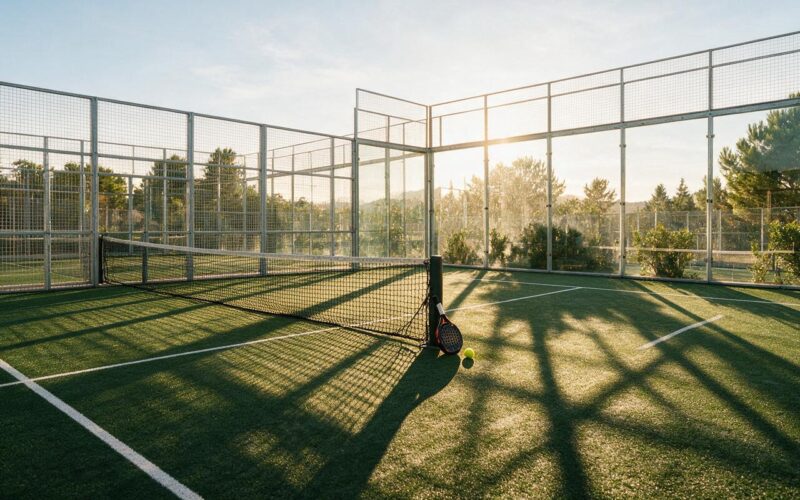
An enclosed court about a third the size of a tennis court, glass and mesh walls, solid stringless paddles, underhand serve, and a ball you can play off the back wall. Always doubles. Scoring follows tennis.
The walls are the entire personality of the sport. Balls stay live, rallies last, and the skill is angles and patience rather than power. If squash and tennis had a friendly child, this is it.
Why Beginners Get Hooked Faster
The learning curve is gentle in a specific way. Because the ball comes off the glass, a mishit is not the end of the point, so new players get long rallies in their first session instead of spending an hour retrieving balls from a fence.
That is the same thing pickleball got right. Instant rallies produce instant fun, and fun on day one is what converts curiosity into a habit. Tennis has never solved this and it has cost the sport dearly.
The Court Problem Nobody Wants to Discuss
Here is why padel will not repeat pickleball’s growth curve, and it has nothing to do with the game. You cannot tape a padel court onto a parking lot. It requires a purpose built enclosure with tempered glass walls and proper lighting, and that means real capital.
Pickleball exploded because every tennis court, gym floor and driveway in America was a potential venue overnight. Padel needs somebody to write a check first, which caps growth at the speed of construction financing rather than the speed of enthusiasm.
So It Grows Where the Money Is
Which explains the geography. Padel clubs are clustering in Miami, Los Angeles, New York, Austin and Houston, in urban markets with disposable income and a membership culture already in place.
That gives padel a very different social profile. Pickleball spread through public parks and retirement communities. Padel is spreading through clubs with a front desk and a bar, and it costs accordingly, usually as court time or membership rather than a $30 paddle and free access.
What It Costs to Try It Once
Court rental typically runs by the hour and gets split four ways, and most clubs rent paddles, so a first session should cost you roughly the price of a nice dinner divided by three friends. Do not buy equipment yet.
If you do get hooked, a decent paddle is the only purchase that matters and shoes designed for the surface are the second. Everything else the club has already bought.
Where This Fits in the Bigger Outdoor Shift
This is one branch of a broader move toward activities that are social first and exercise second, the same instinct behind the way the trail quietly became America’s favorite place to hang out. People are not chasing workouts. They are chasing a reason to see other people that does not involve a restaurant reservation.
Padel is unusually well suited to that. It is always doubles, the rallies are long, and the court is small enough that you can talk between points. It is a conversation with a scoreboard attached.
My Prediction, For What It Is Worth
Padel becomes a real and permanent American sport, and it does not become pickleball. It will be a club sport in expensive cities with a passionate base in the low millions, not a driveway sport with 24 million players.
The risk is the same one that always follows a WSJ trend piece. Capital rushes in, courts get built in markets that cannot fill them at $60 an hour, and a few operators go quiet in 2028. That will get written up as padel failing. It will actually be overbuilding failing, which is a different story entirely.
Frequently Asked Questions
What is padel?
A doubles racquet sport played on an enclosed court roughly a third the size of a tennis court, with glass and mesh walls you can play the ball off, solid stringless paddles and an underhand serve.
How fast is padel growing in the United States?
Public court numbers have reached around 1,000, up roughly 400 percent since 2023, and USA Padel reported individual memberships up 53.5 percent and club memberships up 51.5 percent last year.
Is padel bigger than pickleball?
Not remotely. The 2026 SFIA report counted about 24.3 million American pickleball players in 2025, a 22.8 percent increase. Padel is growing faster in percentage terms from a far smaller base.
Is padel the same as pickleball?
No. Padel uses an enclosed court with walls in play and is always doubles on a larger surface. Pickleball is played on an open court with a perforated plastic ball and no walls.
Do I need my own paddle to start?
No. Most clubs rent paddles and balls with the court. Play a few times before buying anything, then prioritize a paddle and proper court shoes.
Why are there so few padel courts?
Because a court has to be purpose built with tempered glass walls and lighting. Unlike pickleball, you cannot convert an existing surface with tape and a net, so growth depends on construction capital.