There is a particular kind of hunger that shows up around ten thirty in the morning, an hour or two after a breakfast of toast or a bowl of cereal, and it has very little to do with willpower. It is the predictable result of a meal built almost entirely from refined carbohydrates, which send your blood sugar up quickly and then let it fall just as fast, leaving you rummaging through the pantry long before lunch. The most reliable fix is not eating more food. It is eating a different kind of food, and more often than not that means anchoring your morning with real protein.
Protein is the macronutrient that keeps hunger at bay, because it digests slowly and quiets the hormones that tell your brain to go looking for a snack. A breakfast built around twenty-five to thirty grams of it can reshape your entire morning, steadying your energy, sharpening your focus, and quietly removing that mid-morning trip to the vending machine from the equation. The reassuring part is that none of this requires protein powder or an hour at the stove. It only requires knowing which foods carry the load and how to combine them.
Why protein at breakfast matters more than you think
The science here is refreshingly straightforward. When you eat protein, your body works harder and longer to break it down than it does with simple carbohydrates, so the feeling of fullness lasts. Protein also has a direct effect on the appetite hormones that govern when you feel satisfied and when you feel ravenous, which is why people who eat protein-rich breakfasts tend to eat less over the rest of the day without consciously trying. Layered on top of that is the steadier blood sugar you get when protein and fiber slow the release of energy into your bloodstream, replacing the familiar spike and crash with something closer to a gentle, sustained hum.
There is a focus benefit too, one that anyone who has tried to concentrate through a sugar crash will recognize. Stable blood sugar means a steadier supply of fuel to your brain, and that shows up as clearer thinking in the hours when you need it most. For anyone trying to build or simply hold onto muscle, spreading protein across the day rather than saving it all for dinner also helps the body use it more effectively.
The building blocks of a high-protein breakfast
A handful of everyday foods do most of the work, and once you know them you can mix and match forever. Eggs are the obvious anchor, delivering around six grams of protein each along with the kind of richness that makes a breakfast feel like a meal rather than a snack. Greek yogurt and cottage cheese punch well above their weight, often carrying fifteen to twenty grams per serving, and both take beautifully to either sweet or savory treatments. Beyond those, there is smoked salmon, tofu, beans, lean breakfast meats, milk, and a quiet workhorse in the form of protein-rich grains and seeds like oats, quinoa, chia, and hemp.
The trick is to make one of these the centerpiece rather than an afterthought. A bowl of oatmeal becomes a genuine high-protein breakfast when you stir Greek yogurt or a scoop of nut butter into it. A piece of toast transforms when it is topped with two eggs and a slice of smoked salmon instead of jam alone. You are not overhauling your habits so much as reweighting them.
Fast high-protein breakfasts for busy mornings
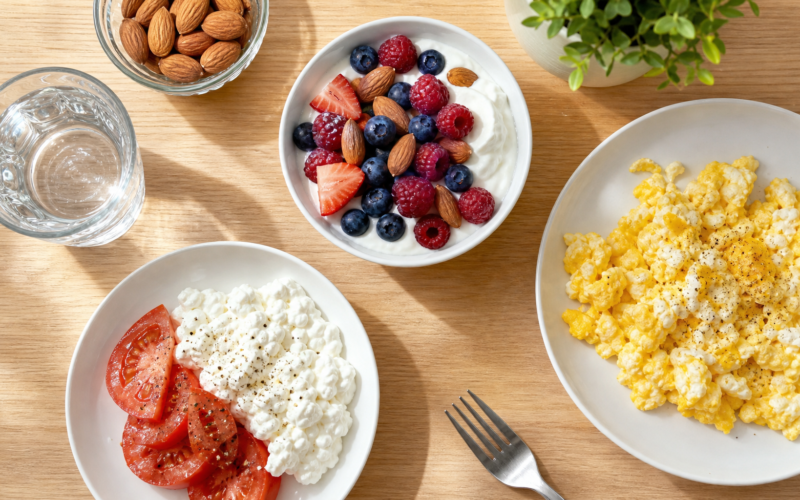
On the mornings when you have five minutes and no patience, speed matters more than artistry. A bowl of Greek yogurt topped with berries, a handful of nuts, and a drizzle of honey comes together in under two minutes and lands you well past the twenty-gram mark. Cottage cheese with sliced tomato, cracked pepper, and a piece of whole-grain toast is savory, filling, and nearly as fast. Two eggs scrambled in a hot pan while your coffee brews will always be a classic for good reason, and a smoothie built on milk or yogurt with a spoonful of nut butter and some frozen fruit can be sipped on the way out the door.
The point of having a few of these in your back pocket is that they remove the decision. When you already know your default, you are far less likely to reach for the pastry that will have you hungry again by mid-morning.
Make-ahead options for people who hate mornings
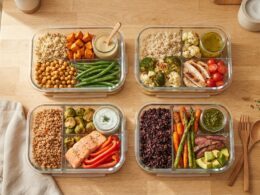
If the very idea of cooking before you are fully awake feels impossible, the answer is to do the work when you are not half-conscious. Baked egg muffins, made by whisking eggs with vegetables and cheese and baking them in a muffin tin, keep for the better part of a week and reheat in under a minute. Overnight oats layered with Greek yogurt and chia seeds sit in the fridge developing flavor while you sleep, ready to eat cold the moment you are. A batch of breakfast burritos wrapped and frozen individually can be pulled out and warmed on the busiest of mornings.
Investing twenty minutes on a Sunday to stock a few of these turns the hardest meal of the day into the easiest. You stop deciding and start simply eating.
Common mistakes that sabotage a healthy breakfast
Plenty of breakfasts that look virtuous quietly fail the fullness test. Flavored yogurts and granolas are often closer to dessert than to a protein source, carrying more sugar than you would guess and not nearly enough protein to matter. Fruit smoothies made without a protein base can spike blood sugar as effectively as a candy bar, however green they look. Even a bowl of oatmeal, wholesome as it is, will leave you hungry within a couple of hours if it stands alone without a protein partner. The fix in every case is the same, which is to ask a simple question of any breakfast before you commit to it: where is the protein coming from, and is there enough of it to carry me to lunch?
Frequently asked questions
How much protein should I eat at breakfast?
A common and practical target is twenty-five to thirty grams, which is enough to meaningfully blunt hunger and steady your energy through the morning. That amount looks like three eggs plus a slice of cheese, a large bowl of Greek yogurt with nuts, or a two-egg scramble alongside a container of cottage cheese. The exact number matters less than consistently hitting a substantial amount rather than the token few grams in a bowl of cereal.
Are eggs really a good source of protein?
Yes, eggs are one of the most complete and convenient protein sources available, delivering all the essential amino acids your body needs along with useful vitamins and healthy fats. At roughly six grams of protein each, a two or three egg breakfast forms a solid foundation, and they are endlessly adaptable, working scrambled, boiled, poached, or baked into make-ahead muffins.
Can I get enough breakfast protein without meat?
Absolutely. Greek yogurt, cottage cheese, eggs, milk, tofu, beans, and protein-rich seeds like chia and hemp make it easy to build a high-protein breakfast without any meat at all. Combining a couple of these, such as yogurt with nuts and seeds, reliably pushes a plant-forward or vegetarian breakfast past the twenty-gram mark.
Is a high-protein breakfast good for weight management?
For many people it helps, largely because feeling full and steady in the morning reduces the urge to snack and overeat later in the day. Protein is more satisfying per bite than refined carbohydrates, so a protein-forward breakfast can make the rest of your eating feel more effortless. As with any dietary change, it works best as part of an overall balanced approach rather than as a rule in isolation.
Start your day on steadier ground
You do not need to become a different person or buy special supplements to eat a better breakfast. You simply need to make protein the star instead of a side character, and to keep two or three easy defaults ready so the choice is already made when you are tired and rushed. For balanced, science-based guidance on building a healthy plate, the government resource at MyPlate.gov is a trustworthy place to start. When you are ready to bring that same intention to the rest of your day, our guide to easy 30-minute dinner recipes keeps dinner just as painless, and you can find more in the Food and Recipes section.