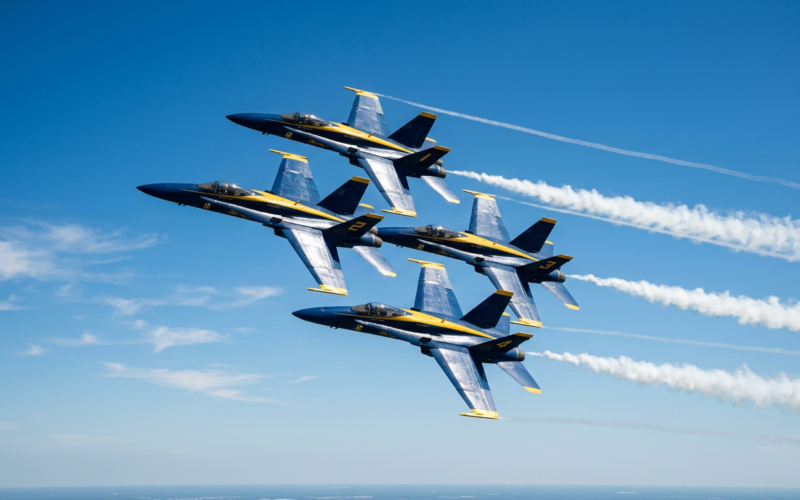
There is nothing quite like the moment a formation of jets tears across the sky and the sound catches up to you a half second later, thumping in your chest. Air shows like the ones the Blue Angels headline draw millions of people every year, and for good reason. They are loud, free or cheap, and genuinely awe inspiring. But a great day at an air show is really a day of small smart choices maChasing the Roar: A Beginner’s Field Guide to Watching an Air Show Safely
There is nothing quite like the moment a formation of jets tears across the sky and the sound hits your chest a half second later. Air shows like a Blue Angels performance are pure spectacle, and they pull in families, aviation buffs, and curious first-timers by the tens of thousands. If you have never been to one, the crowds and the noise and the logistics can feel overwhelming. A little planning turns a chaotic day in the sun into a memory you will talk about for years.
Arrive Early and Plan Your Exit
Air shows draw enormous crowds, and the biggest headache is almost never the flying. It is the parking and the traffic. Gates often open hours before the headline act, so treat the early arrival as part of the fun rather than a chore. Scope out where you parked, note the nearest exits, and agree on a meeting spot with your group in case phones die or signals jam. Leaving is the hard part, so many veterans linger for a while after the final pass and let the worst of the traffic drain away first.
Protect Your Ears and Your Skin
Protect Your Ears
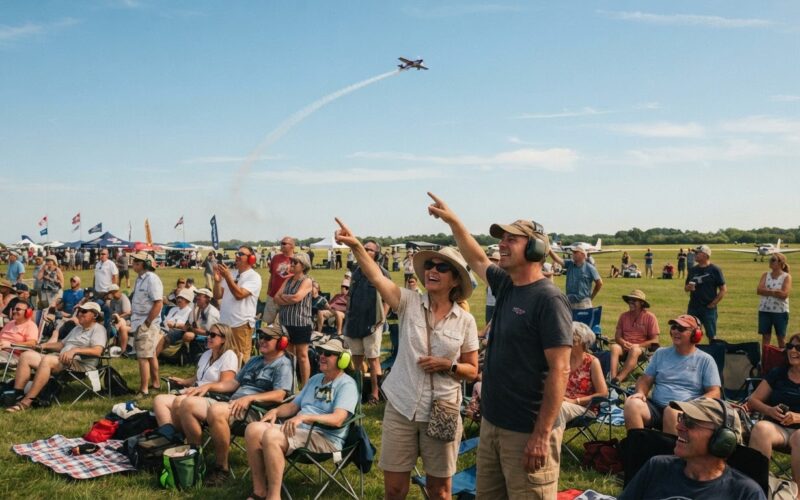
Fighter jets are staggeringly loud, often well past the level where hearing damage becomes a real risk. Bring foam earplugs for everyone in your group, and pack over the ear muffs for young children, whose hearing is more vulnerable. The other silent threat is the sun. Air shows mean hours in open areas with little shade, so sunscreen, a wide brimmed hat, and far more water than you think you need are not optional. Reapply the sunscreen at lunch, because the day almost always runs longer than planned.
The sound at an air show is part of the thrill, but it is genuinely loud, often loud enough to be uncomfortable for small children and even some adults. Bring hearing protection for everyone in your group. Foam earplugs work in a pinch, and padded earmuffs are a smart choice for babies and toddlers, whose ears are far more sensitive than ours. You will still feel the rumble in your bones, which is the best part anyway, but you will save your hearing while you do it.
Pack Light but Pack Smart
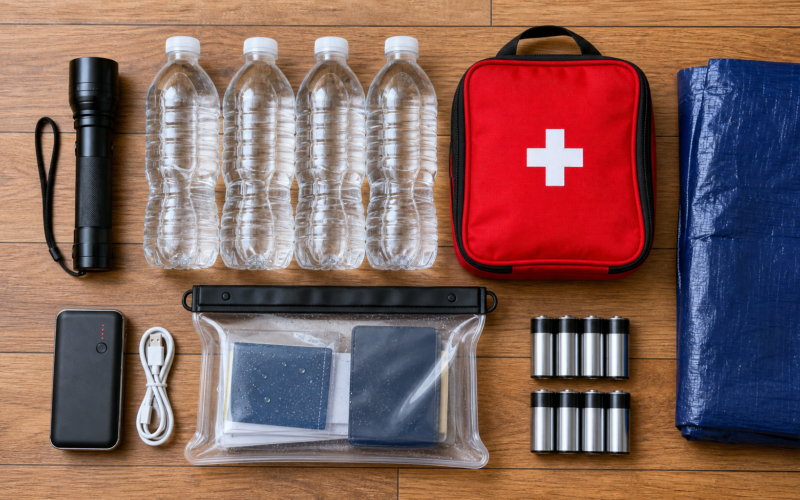
Most venues have bag restrictions, so check the event website before you load up a cooler. A small backpack with water, snacks, sunscreen, earplugs, and a portable phone charger covers the essentials. Low folding chairs or a blanket make the long stretches between acts far more comfortable. Leave anything valuable or bulky in the car, and remember that many shows ban drones outright, since an unauthorized drone can ground the entire flying program in an instant.
Know Where to Look
It is best to leave pets at home. The noise from jet engines is terrifying and physically harmful to animals, and many venues ban them outright for that reason.
Where is the best place to sit? Anywhere along the show line with an open view of the sky works well. Center crowd areas near the announcer stand usually give the best sense of the choreography.
How long does a typical air show last? The flying program often runs three to five hours, with the headline act at the end. Plan for a full day once you factor in arrival, parking, and the slow exit.
Related reading: For more on this, take a look at our guide to what goes into a Blue Angels flyover.
The Bottom Line
An air show rewards the people who prepare. Show up early, protect your ears and skin, pack the essentials, and know your way out, and the day becomes pure wonder instead of a logistical headache. The planes will take care of the awe. Your job is simply to set yourself up to enjoy every thunderous second of it.stead of a logistical headache. The planes will take care of the awe. Your job is simply to set yourself up to enjoy every thunderous second of it.
Frequently Asked Questions
Are air shows safe to bring young kids to? Yes, they are very family friendly, but the noise is the main concern. Bring ear protection sized for children, plan for a shady break, and set a meeting spot in case anyone gets separated in the crowd.
How much does it cost to attend? Many air shows, especially those on military bases, are free to attend. Costs usually come from parking, premium seating areas, and food, so bringing your own water and snacks keeps the day cheap.
What happens if the weather is bad? Low clouds or high winds can force pilots to fly a limited routine or cancel certain maneuvers. Shows rarely refund free events, so check the forecast and keep your expectations flexible.
de hours before the first plane takes off. Here is how to enjoy the spectacle without ending up sunburned, hoarse, and stuck in a four hour parking lot.
Arrive Early and Plan the Exit First
Air shows pull enormous crowds into spaces that were never designed for them, whether that is a beach, a lakefront, or a military base. The single biggest mistake first timers make is showing up an hour before the headline act. By then the good spots are gone and the roads are gridlocked. Arrive in the morning even if the jets do not fly until afternoon, and the moment you park, take a mental note of how you will leave. Knowing your exit route before you settle in turns the dreaded post show crawl into a manageable wait.