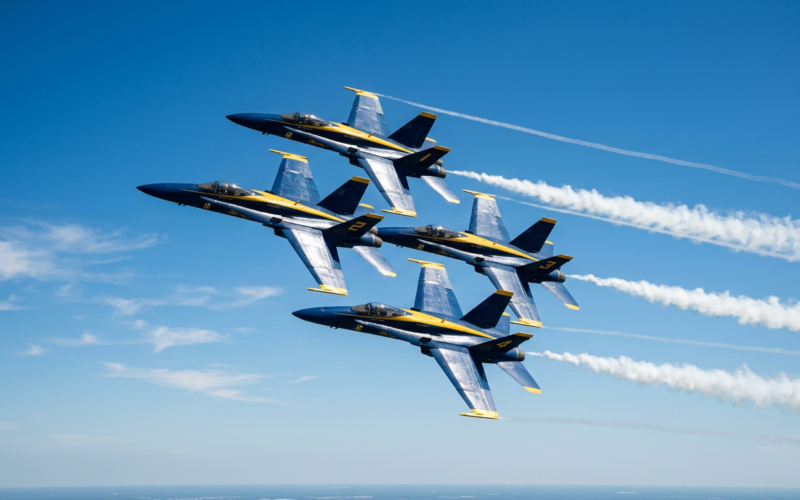
When six jets slice through the sky in a diamond so tight the wingtips seem to touch, it looks like magic. It is not. A Blue Angels flyover is the product of thousands of hours of practice, a rigid safety culture, and a level of trust between pilots that most of us never experience in any part of our lives. Understanding what goes into those few minutes overhead makes watching them even more thrilling. Here is a look under the canopy at how a precision flight demonstration actually comes together.
The Diamond and the Solos
A demonstration team is usually split into two groups. The diamond formation is the four jets you see flying in the classic tight shape, and their job is smoothness and precision. The solos, typically two more jets, handle the high speed passes and the sharp opposing maneuvers that make the crowd gasp. The two groups fly separate parts of the show and then join together for the big finale. Knowing this split helps you follow the action, because once the diamond breaks apart you know the fast solo passes are about to begin.
Inches, Not Feet
The detail that stuns most people is how close the jets actually fly. In the tightest formations, the aircraft are separated by just a few feet, sometimes less than the length of a car. At those distances there is no room for error, so the pilots do not rely on reflexes alone. They use the lead jet as a constant visual reference and make tiny, continuous corrections with the stick, holding their position by watching a fixed point on the plane beside them rather than the ground far below.
Practice, Practice, Practice
Long before the season starts, demonstration teams spend months in dedicated training, often flying multiple practice sessions a day. Every flight is recorded and then reviewed on the ground in painstaking detail, where pilots critique each maneuver frame by frame. This debrief culture, where even the most senior flyer openly names their own mistakes, is a huge part of why the shows are as safe as they are. The polish you see overhead is really the visible tip of an enormous, unglamorous mountain of repetition.
Why the Ground Crew Matters
The pilots get the glory, but a flyover would be impossible without the maintenance and support teams on the ground. These crews inspect the aircraft before and after every flight, manage the precise timing of takeoffs, and keep the jets in flawless condition all season long. When you watch the team march out to their planes in perfect unison, that choreography extends to a whole organization of people who never leave the tarmac but make every second in the air possible.
Frequently Asked Questions
How close do the jets really fly to each other? In the tightest diamond formations, wingtips can be just a few feet apart. It is one of the most demanding forms of flying anywhere, which is why the training is so relentless.
How many pilots are on a demonstration team? The flying demonstration typically features six jets, split between the four ship diamond and two solos, supported by a much larger group of officers and enlisted crew.
Do the pilots wear special suits to handle the g forces? Interestingly, formation pilots often fly without the inflating g suits many fighter pilots use, because the suit can bump the control stick and disrupt the precise inputs they need. They rely on physical conditioning and breathing techniques instead.
How long does it take to train for the team? New pilots spend an entire winter training season learning the routine before they ever fly it in front of a crowd, building up from wide, safe spacing to the tight show formations.
Why do they fly so low over the crowd? Lower passes are more dramatic and easier for spectators to see, but they follow strict safety rules that keep the aircraft a set distance from the crowd line at all times.
Related reading: For more on this, take a look at our guide to watching an air show safely.
The Bottom Line
The next time you crane your neck to watch a flyover, remember that the beauty is built on discipline. Every impossibly tight turn is the result of countless quiet hours of practice, debriefs, and teamwork stretching from the cockpit all the way to the tarmac. Knowing that does not make the show less magical. It makes it more human, and somehow even more impressive.