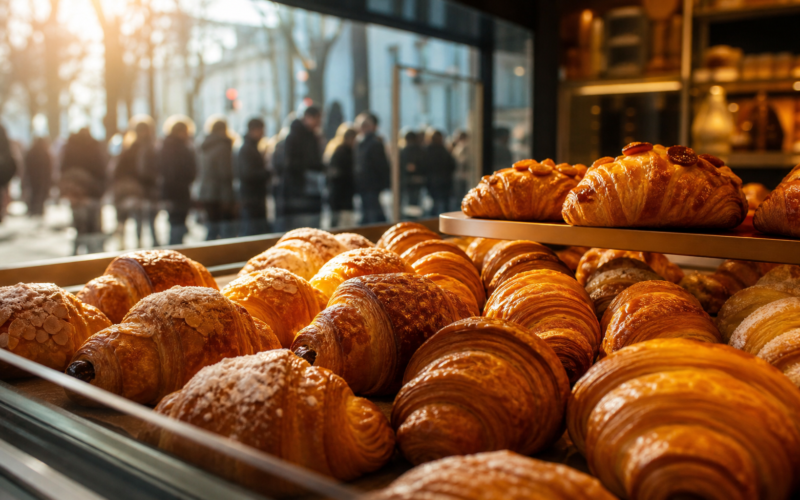
The dessert economy reached a milestone this month, and it is not a flattering one. People are now hiring professional line sitters to wait outside bakeries on their behalf so they can collect a pastry that went viral on a short video app. Somebody stands in the sun for three hours. Somebody else arrives, takes the box, takes the photo, and posts it. That is the whole transaction, and it is worth sitting with what it says about how food trends work now.
The line is the product
Start with the uncomfortable part. A two-hour line is not a symptom of a great bakery, it is a feature of the marketing. Visible scarcity is the single most effective food advertisement that exists, and a queue down the block generates more short-form video than any paid campaign could. Some shops are genuinely overwhelmed. Others have quietly figured out that releasing forty of something at eleven in the morning is more valuable than selling four hundred all day.
What the hype tax actually costs
Run the real math on one viral croissant. Call it nine dollars for the pastry, plus a line sitter, plus the transit, plus the tip, plus the coffee you buy while you wait. You are comfortably past forty dollars for a breakfast item that a bakery two neighborhoods over makes better on a Tuesday with no line at all. The trend is not that people are being scammed. It is that the price of the food stopped being the price of the experience a while ago.
The recipes that actually spread are the simple ones
Look at what has genuinely traveled this year and there is a pattern. Korean fried chicken. A tomato pasta that comes together in twenty minutes. Dumpling lasagna. Arayes. Macarona bil laban, which is a Middle Eastern yogurt pasta with roots much older than any app. None of those require a line. They spread because they are cheap, forgiving, and photograph well in a home kitchen. The bakery hype and the recipe trends are two completely different phenomena that get discussed as if they are one thing.
Borrowed dishes deserve their actual names
Worth flagging, since it keeps happening. Half the viral recipes of the past year are established regional dishes that got rebranded by whoever filmed them best. Macarona bil laban is not a new invention. Arayes is not a new invention. There is nothing wrong with a dish finding a new audience, and there is something a little wrong with stripping its name off on the way there. Using the real name costs you nothing and it is more interesting anyway.
Bakeries are not built for this
Spare a thought for the shops themselves. A small bakery has a fixed oven, a fixed staff, and margins that assume a predictable Saturday. Going viral does not scale any of that. What it does is create three months of unmanageable demand, burn out the staff, alienate the regulars who used to be able to walk in, and then move on to the next place. Plenty of owners will tell you privately that the viral moment was the worst thing that happened to them.
How to find the good version without the line
The reliable trick is to look for the bakery that is good at one boring thing. A shop that makes an excellent plain croissant is a shop that can make anything. Go on a weekday morning. Ask what they are proud of instead of asking for the thing you saw online. And if a place has a line and no seating, that is usually a sign it was built for takeout photos rather than for eating, which are not the same business.
Make the trend at home, it is usually better
Most viral desserts are engineered for contrast, which is why they look so good on camera and often disappoint in person. Crispy shell, soft interior, sauce that moves. Those are things you can absolutely do in a home kitchen, and you get to eat it warm instead of an hour later out of a cardboard box in a rideshare. Warm changes everything. That is the actual reason the video looked better than your bite did.
The part that is genuinely fine
None of this is a moral failing. Standing in line for food is an ancient and enjoyable thing to do with a friend, and paying somebody to hold your place in a queue is a real service that real people are getting paid for. The only thing worth pushing back on is the assumption that the line is evidence of quality. It is evidence of demand, and demand is manufactured constantly. If you want a sense of how much of your budget this kind of spending quietly absorbs, the same pattern is showing up in seasonal retail right now.
Frequently Asked Questions
What is a line sitter?
Someone you pay to physically wait in a queue for you, usually by the hour. The practice started with product launches and courthouse filings and has now reached bakeries.
Why are bakery lines so long?
A mix of genuinely limited kitchen capacity and deliberate limited releases, because visible scarcity drives enormous free promotion on short video platforms.
Is the viral dessert usually worth it?
Sometimes. But most are built for contrast in texture, which fades fast, so the version you eat an hour after pickup is rarely the version you saw online.
What are the biggest food trends this year?
Simple, cheap, high-contrast cooking has dominated: Korean fried chicken, fast tomato pastas, dumpling lasagna, arayes, and macarona bil laban.
What is macarona bil laban?
A Middle Eastern pasta dish built on a warm yogurt sauce, often with garlic and meat. It went viral recently but the dish itself is long established.
How do I find a good bakery without following trends?
Order the plainest thing on the menu on a weekday. A shop that nails a plain croissant is a shop worth returning to.