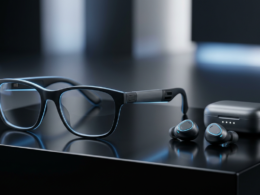
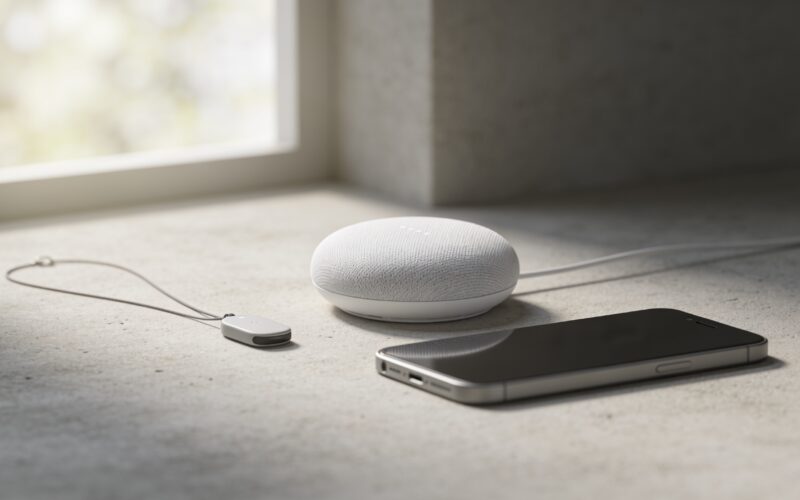
Greg Brockman said it out loud this week, and it reframes a year of rumors. OpenAI AI devices are not arriving as one gadget with one launch date. They are arriving as a family, voice first, built to be carried and spoken to rather than stared at. That is a much larger swing than a single product, and it explains why nearly every big hardware company has spent 2026 quietly building something you wear.
What OpenAI Actually Confirmed
The company president told reporters that OpenAI is developing a suite of AI powered products built around ChatGPT rather than a single flagship, and that the products will be voice first. Coverage points to a first unveiling in the back half of 2026. The phrasing is deliberately loose, and the looseness is the strategy. Announcing a category buys you patience from investors and reviewers. Announcing a phone killer buys you a deadline you will almost certainly miss in public.
Voice First Is the Whole Bet
Voice first is not a feature description. It is an argument that the tap, scroll and swipe grammar we learned in 2007 is the actual bottleneck. If a model can hold context across a day, the theory goes, you should be able to talk to it the way you would talk to a competent assistant who already read your calendar. The counterargument is simple and stubborn. Voice is slow, public, and terrible in a room with other people in it.
The Screen Is the Thing They Want to Demote
Nobody at OpenAI is claiming your phone disappears next spring. The nearer goal is demotion. Move the small, frequent interactions off the glass, and the phone becomes the thing in your bag rather than the thing in your hand. That is a modest sounding goal with enormous downstream consequences, because whoever owns the default interaction layer also owns the defaults for search, commerce and payment underneath it.
Everyone Else Already Shipped
OpenAI is not early here, which is the uncomfortable part. Meta is selling millions of camera equipped smart glasses through its EssilorLuxottica partnership. Samsung has its own smart glasses slated for later this year. A whole shelf of AI wearables from smaller companies has been on sale long enough to get properly reviewed, and the reviews have been mixed in a very specific way. The hardware works. The reason to keep wearing it does not always show up.
The Hard Part Was Never the Hardware
Contract manufacturers can build a nice aluminum object with good microphones. What nobody has solved is the reliability floor. An assistant that is right ninety percent of the time is a delight in a demo and a liability in a life, because the ten percent lands on your dinner reservation, your medication reminder, or the message you thought you sent. Phones earned trust by being boringly deterministic. Assistants have to earn it a much harder way.
What a Family Buys Them
Shipping several devices at once is a hedge dressed as ambition. If the pendant flops and the speaker sells, the narrative survives. It also lets OpenAI test form factors in public rather than guessing, which is exactly what a company with enormous capital and no hardware track record should do. The risk is the one every platform hopeful hits, which is spreading a thin software team across four pieces of plastic and doing none of them very well.
The Case That This Goes Badly
There is a real version of this story where it fails, and it is not about taste. It is about power, connectivity and cost. Always listening devices eat batteries. Cloud dependent assistants break in elevators and on planes. Subscription pricing on top of a subscription people already pay is a hard sell in a year when consumers are trimming everything. And the privacy conversation around wearable microphones has not gone well for anyone yet, which is worth remembering before the first keynote.
What to Watch Before You Preorder
Three things will tell you whether this is real. Watch whether the device works with the network off, because local capability is the difference between a product and a terminal. Watch what happens to your data by default rather than what the settings allow. And watch the return rate about six weeks after launch, which is when novelty wears off and the honest verdict arrives. If workplaces start writing policies about these things, that is your answer about adoption. Employers are already rewriting the rules about where and how people work, and recording devices will land squarely in that fight.
Frequently Asked Questions
When will OpenAI devices actually launch?
Reporting points to a first unveiling in the second half of 2026, but an unveiling is not a ship date. Treat any specific month you see quoted as an estimate until the company puts a price and a preorder page behind it.
Will these replace my phone?
Not soon, and probably not ever in a clean swap. The realistic outcome is that some quick tasks move off your phone while the phone keeps doing everything that needs a screen, a camera roll or a banking app.
Do they need an internet connection?
Almost certainly yes for the heavier work. How much runs on the device itself is the single most important spec to look for, because it determines whether the thing is useful in a basement or on a plane.
How is this different from smart glasses?
Smart glasses lead with a camera. Voice first devices lead with a microphone and a speaker. The privacy questions overlap, but a device that mostly listens raises different concerns than one that mostly watches.
What will they cost?
Nothing has been announced. Comparable AI wearables have landed between one hundred and four hundred dollars, and several carry a monthly subscription on top, which is the number that usually decides whether people keep them.
Is it worth waiting for the first version?
First generation hardware from a company with no hardware history is the definition of paying to be a tester. If you are curious rather than committed, the second version is where the price and the reliability usually get sensible.