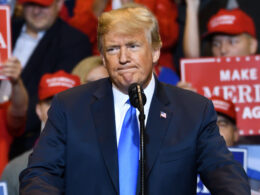

The Trump administration is preparing to revoke as many as 200,000 business and tourist visas held by people who later applied for asylum, according to reporting first published Monday. If carried out at that scale it would be the largest single visa revocation action on record.
The plan targets a specific and narrow group: people who entered the United States lawfully on a B1 or B2 visa and subsequently filed an asylum claim. It has not been executed, and no formal notice has been published.
What a B1 or B2 Visa Is
The B1 is for temporary business travel: meetings, conferences, negotiations. The B2 covers tourism, visiting family, and medical treatment. They are frequently issued together as a combined B1 and B2 and they are by a wide margin the most common nonimmigrant visas the United States issues.
Neither permits work and neither leads to permanent residence on its own. They authorize a temporary stay for a stated purpose, and both are issued with the expectation that the holder leaves.
Why Filing for Asylum Is the Trigger
This is the mechanism at the center of the plan, and it is worth stating precisely. Applying for asylum after entering on a visitor visa is legal. Federal law permits a person physically present in the United States to apply for asylum regardless of how they entered, subject to a filing deadline.
The administration’s position, as described in reporting, is that filing for asylum demonstrates the person did not actually intend a temporary visit, which contradicts the basis on which the visa was issued. That is a legal argument about intent, and intent at the time of entry is notoriously difficult to establish after the fact.
What Revocation Does and Does Not Do
Revoking a visa cancels the document that permits entry. It does not by itself remove someone already inside the country, and it does not terminate a pending asylum application, which proceeds on its own track.
The practical effects are still significant. A person with a revoked visa who leaves cannot return on it. Revocation can also complicate work authorization and travel, and it functions as pressure on people whose cases may take years to reach a hearing.
The Backlog Is the Context
The immigration court system has been carrying a backlog measured in millions of cases for years, with waits commonly running past three years and sometimes far longer. That delay is the environment every asylum policy operates inside.
Any action affecting hundreds of thousands of people interacts with that backlog rather than bypassing it. Adding a new category of contested status to a system already unable to schedule the cases it has is the operational reality, whatever the legal merits. Federal policy has been moving fast and unevenly across several fronts, as our coverage of the collapse of the US Canada trade talks showed in a different arena.
The Likely Legal Fight
Visa revocation authority is broad and courts have historically given the executive branch wide latitude over who may enter the country. That is the strongest ground the plan stands on.
The vulnerability is process. Mass action affecting a defined class of people invites arguments about whether individualized determinations were made and whether affected people received notice and an opportunity to respond. Those procedural questions are where large immigration actions have most often been slowed.
What Affected People Should Understand
Nothing has happened yet. No revocations have been issued under this plan and no formal notice exists. Anyone in this situation should be talking to an immigration attorney rather than acting on reporting.
The specific thing worth knowing is that a pending asylum application and a valid visa are separate legal statuses. Losing one does not automatically resolve the other, and the interaction between them is precisely where individual circumstances matter most.
How to Read the Number
Two hundred thousand is a ceiling described in reporting, not a confirmed list. Figures at that stage of a policy process routinely change as legal review narrows the affected population.
It is also worth noting the plan comes from sourced reporting rather than from an announcement. That does not make it wrong. It does mean the details are provisional and the scope could look very different by the time anything is executed.
What to Watch Next
Watch for an official announcement or a Federal Register notice, which is what converts a reported plan into a policy with a defined scope and effective date.
Watch for litigation, which would be immediate. And watch whether the final scope matches the reported number, since the gap between a briefed plan and an executed one is frequently large.
It is also worth understanding why the B1 and B2 category specifically is the pressure point. These visas are issued in enormous volume, they are relatively accessible compared with employment or student categories, and they are the most common lawful route into the country for someone who later decides not to leave.
That makes the population large and identifiable in government records, which is precisely what makes a mass action administratively feasible here and not in other categories. The government already knows who these people are because they applied for asylum through official channels.
There is an uncomfortable implication in that. The people affected are, by definition, the ones who followed the rules on entry and then used a lawful process afterward. Whatever the merits of the policy, it operates on the population that engaged with the system rather than the one that avoided it.
Frequently Asked Questions
What is the administration planning?
Revoking as many as 200,000 B1 and B2 visas held by people who entered lawfully and later applied for asylum. It was reported Monday, August 24, 2026 and has not been executed.
Is applying for asylum after entering on a visa legal?
Yes. Federal law permits a person physically present in the United States to apply for asylum regardless of manner of entry, subject to a filing deadline.
Would revocation cause deportation?
Not directly. Revoking a visa cancels the entry document. It does not by itself remove someone already present, and it does not terminate a pending asylum application.
Has this happened before at this scale?
No. If carried out as described it would be the largest single visa revocation action on record.
Will it be challenged in court?
Almost certainly. Executive authority over visas is broad, but mass actions affecting a defined class typically draw procedural challenges over notice and individualized determinations.
What should someone affected do?
Consult an immigration attorney. Nothing has been executed, and a pending asylum application and visa status are separate legal matters whose interaction depends on individual circumstances.