The Department of Agriculture put out its latest food price outlook this week and the message is the kind that lands harder the second time you read it. All food prices are forecast to rise 3.1 percent this year, then another 3.1 percent next year. Food eaten away from home, meaning restaurants and takeout, is projected to climb 3.5 percent.
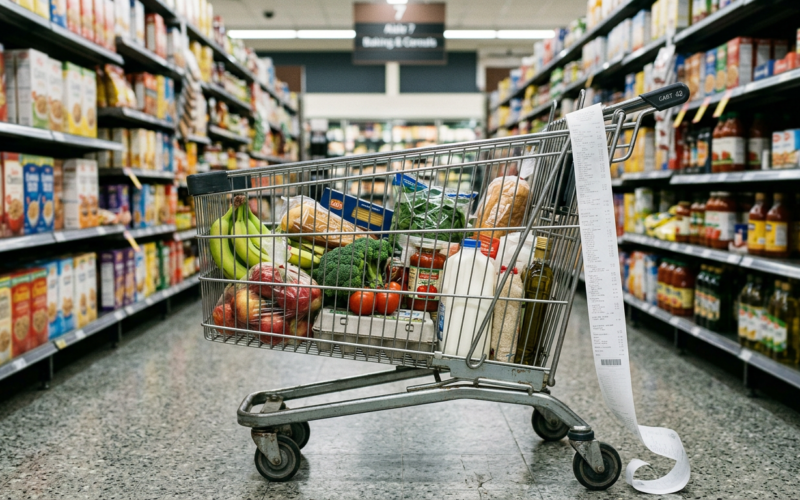
Those are modest sounding numbers stacked on top of the largest grocery jump in fifty years. That is the part that explains why a household can watch inflation cool on the news and still stand in a checkout line feeling ambushed.
A Small Percentage on a Large Base
Percentages are a terrible way to feel a grocery bill. A three percent increase on a total that already rose sharply is not a return to normal, it is a second helping. Prices do not fall when inflation slows, they simply stop climbing as quickly. Households are adjusting to a permanently higher floor while the official numbers describe an improvement. Both things are accurate, which is why the conversation about food costs so often turns into two people talking past each other.
Restaurants Are Rising Faster Than Groceries
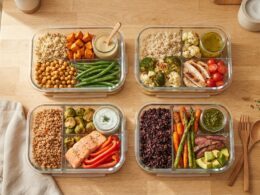
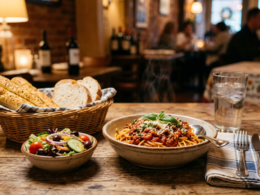
The 3.5 percent forecast for food away from home outpaces the overall figure, and it has for several years running. Restaurants carry labor, rent, insurance and delivery commissions that a grocery aisle does not, and every one of those inputs has gotten more expensive. Some quarterly data actually shows restaurant price increases slowing, which is genuinely good news, but slowing from a higher rate still widens the gap between eating in and eating out. The math nudges more meals back into home kitchens whether anyone planned it or not.
People Are Buying Less Meat
The clearest behavioral signal in the data is meat volume. Shoppers are buying less of it, not because tastes shifted overnight but because it is the single most expensive line in most carts. Trading down happens in stages. First it is a cheaper cut, then it is chicken instead of beef, then it is meat as a component rather than a centerpiece. Every one of those steps looks like a lifestyle choice from the outside and feels like arithmetic from the inside.
Eggs Went the Other Direction
Not everything is moving up. Recent quarterly commerce data points to grocery price deflation driven largely by eggs, which have finally come down after several extraordinary years. It is a useful reminder that food inflation is not a single number moving as a block. It is thousands of items, each with its own supply story, averaged into a figure that describes nobody in particular. Your bill depends less on the average than on which twenty items you actually buy every week.
There is a psychological piece here that the forecasts cannot capture. Households do not track a weekly average, they track landmarks. The price of a dozen eggs, a gallon of milk, a pound of ground beef and a bag of coffee function as the entire economy for most people, and when those four move together the mood shifts regardless of what the broader index says. Grocers know this, which is why those specific items get used as loss leaders more aggressively than anything else in the store.
Why Prices Went Up in the First Place
A study circulating this week attributes today’s elevated prices largely to supply disruptions, tariffs and regulatory costs rather than to any single villain. That framing is worth holding onto, because food pricing debates tend to collapse into blaming grocers or blaming farmers. In practice the cost of a box of cereal accumulates across a dozen steps, and a two percent increase at four of those steps produces a number that surprises everyone at the end of the chain.
Climate Is Becoming a Line Item
Economists are increasingly pointing at weather rather than geopolitics as the main upward pressure on food prices in the next few years. Heat waves reduce yields, drought moves cattle to market early and then shrinks herds later, and storms interrupt the logistics that keep produce cheap. The term climateflation is doing the rounds, and while the word is clumsy, the mechanism is not complicated. A hotter growing season shows up in a receipt about eighteen months later.
What Households Are Actually Doing
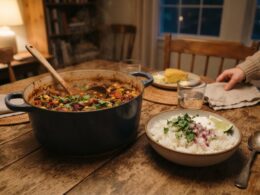
Shoppers have rewired routines rather than simply cutting back. More trips to more stores, heavier use of loyalty pricing, store brands moving from compromise to default, and a genuine revival of cooking in volume on weekends. The interesting part is that most of these adaptations are sticky. People who learned to cook a pot of something on Sunday during an expensive year tend to keep doing it during a cheaper one, which quietly changes what the grocery industry sells for the next decade.
What to Watch Next
Two indicators matter more than the headline. Watch the spread between grocery and restaurant inflation, because a widening gap predicts where dinner happens. And watch protein specifically, since meat and dairy drive both the emotional and the actual weight of a cart. If those two settle, the rest of the basket tends to follow. If they do not, expect the next forecast to read a lot like this one.
It also explains why comfort food keeps taking over menus, since familiar and inexpensive tend to arrive at the table together.
Frequently Asked Questions
How much are food prices expected to rise?
The Department of Agriculture forecasts all food prices rising 3.1 percent in 2026 and another 3.1 percent in 2027, with restaurant prices up 3.5 percent.
Why do groceries still feel expensive if inflation is slowing?
Slower inflation means prices are climbing more gently, not falling. The elevated base from the previous jump remains in place.
Are restaurants rising faster than grocery stores?
Yes. Food away from home is forecast to rise faster because restaurants absorb labor, rent, insurance and delivery costs that grocers do not.
Why are shoppers buying less meat?
Meat is typically the most expensive category in a cart, so it is the first place households trade down when budgets tighten.
Is anything getting cheaper?
Eggs have driven measurable grocery deflation recently after several volatile years, which shows how uneven food pricing can be item by item.
What is climateflation?
It is shorthand for food and commodity price increases driven by heat, drought and storms reducing yields and disrupting supply chains.